Publications & Testimony
Testimony and Statements on the Death Penalty
FROM DPIC
For testimony by former Executive Director Robert Dunham and former Executive Director Richard C. Dieter, please visit our page DPIC Testimony.
FROM RELIGIOUS LEADERS AND ORGANIZATIONS
- News Brief: Pope Francis Calls for Prayer to Abolish the Death Penalty (September 1, 2022)
- Jewish Congregation Renews Request for Department of Justice to Drop Death Penalty in Tree of Life Synagogue Killings (June 24, 2021)
- Orthodox Church Patriarch Calls Death Penalty Incompatible with Christian Beliefs (October 20, 2020)
- Presbyterian Church (U.S.A.) — Statement on the Federal Death Penalty (August 5, 2019)
- Louisiana Christian Faith Leaders Call for State to Abolish Death Penalty (April 25, 2019)
- Pittsburgh Rabbi’s Wife Opposes Death Penalty for Tree of Life Synagogue Killings (March 18, 2019)
- Orthodox Jewish Organization Calls for an End to Capital Punishment in the U.S. | Death Penalty Information Center (February 17, 2016)
- Baptist Theologian Says Death Penalty Does Not Fit With Christian Theology (March 8, 2016)
- Civil and Human Rights: Death Penalty — Church & Society, The United Methodist Church
- Religious Views: Over 150 Catholic Theologians Call for Repeal of the Death Penalty (September 27, 2011)
- Power Over Life and Death — The Power to Save a Life (January 15, 2005)
- Responsibility, Rehabilitation, and Restoration: A Catholic Perspective on Crime and Criminal Justice (November 2000)
- The Challenge of Holiness: A Sermon on the Death Penalty (January 10, 2000)
- General Assembly of the Texas Conference of Churches — Resolution Opposing the Death Penalty (February 24, 1998)
- Statement by Catholic Bishops of Texas on Capital Punishment (October 20, 1997)
- Catholic Church Expresses Strong Opposition to Capital Punishment in Catechism (September 9, 1997)
- Catholic Bishops of Iowa Issue Statement on Death Penalty (February 4, 1998)
- To End the Death Penalty: A Report of the National Jewish/Catholic Consultation
- Transcript of Dr. Pat Robertson’s Speech on the Role of Religion and the Death Penalty at The College of William and Mary
- Collection of Official Catholic Statements on the Death Penalty (1980)
FROM THE INTERNATIONAL COMMUNITY
- UN experts call for universal abolition of the death penalty | OHCHR (October 9, 2023)
- Zambia Becomes 25th Sub-Saharan African Nation to Abolish Death Penalty (December 23, 2022)
- Belgium Wants a World Without the Death Penalty (October 20, 2022)
- As France Prepares to Assume Presidency of European Union, Emmanuel Macron Announces Initiative for Worldwide Abolition of Death Penalty (October 11, 2021)
- U.N. Secretary-General, European Union Ambassador Call for Abolition of “Barbaric” Death Penalty (October 11, 2017)
- European Union Calls for Abolition of Capital Punishment as World Coalition Hosts International Death Penalty Conference (June 27, 2017)
- U.N. Investigator Talks About the Future of Solitary and the Death Penalty (November 7, 2016)
- World Congress Against the Death Penalty Renews Call for Global Moratorium, Pope Sends Message of Support (June 27, 2016)
- Declaration by the Presidency on behalf of the European Union on the 400th execution in Texas from the Council of the European Union (August 21, 2007)
- Resolution Supporting Worldwide Moratorium on Executions from the United Nations Commission on Human Rights (April 1999)
- Mary Robinson, U.N. High Commissioner for Human Rights — Message to the Press Conference organized by the Death Penalty Information Center for the release of the report, “International Perspectives on the Death Penalty” (October 12, 1999)
- Status of the International Covenants on Human Rights from the United Nations Commission on Human Rights (April 1998)
FROM ADVOCACY GROUPS
- Advocacy Group Tells Supreme Court that Negative Stereotypes Distort Perception that Latinos in Death-Penalty Cases Pose Future Danger to Society (April 15, 2022)
- Disability Rights Groups, Legal Experts, and Conservative Advocates Urge Supreme Court to Strike Down Georgia’s Uniquely Harsh Proof Requirements in Death-Penalty Intellectual Disabilities Cases (January 11, 2022)
- NAACP Reaffirms Its Support of Abolishing the Death Penalty (2022)
- More Than 80 Civil Rights and Advocacy Organizations Urge President Biden to End Federal Executions | Death Penalty Information Center (February 9, 2021)
- More Than 250 Conservative Leaders Join Call to End Death Penalty (October 29, 2019)
- National Alliance on Mental Illness: The Death Penalty
- Florida League of Women Voters Calls for Halt to Executions (May 28, 2007)
- Victims Organizations Issue Joint Statement for National Victims’ Rights Week (April 19, 2007)
FROM JUDGES, LEGISLATORS, AND OTHER ORGANIZATIONS
- Republican-led Oklahoma committee considers pause on executions amid death case scrutiny (October 5, 2023)
- Former Pro-Death Penalty District Attorney Explains Why He Now Supports Abolition, and Fears Political Promises to Expand the Use of the Death Penalty (August 20, 2023)
- Pressley, Durbin Reintroduce Bill to End the Federal Death Penalty (July 13, 2023)
- The Lancet Editorial: Physician Involvement in Executions Violates Medical Ethics | Death Penalty Information Center (May 20, 2023)
- APA calls for extending ineligibility for the death penalty to adolescent offenders younger than age 21 (August 4, 2022)
- Why some Republicans are turning against the death penalty | Ron Ferguson | Ohio House of Representatives (March 8, 2022)
- Eight years on Texas’ highest criminal court turned Elsa Alcala into a death penalty skeptic. How will the court change without her? (January 26, 2019)
- AMA to Supreme Court: Doctor participation in executions unethical (August 22, 2018)
- Former Governor Bill Richardson: Death Penalty Is Bad for Business, Out of Step With World’s Views (June 16, 2017)
- Capital Punishment and Nurses’ Participation in Capital Punishment (2016)
- Former Ohio Attorney General Jim Petro Says Death Penalty Unfixable, “Not Worth It Any More” (September 12, 2016)
- Resolution Supporting Repeal of the Death Penalty, National Hispanic Caucus of State Legislators (August 11, 2016)
- Retired Police Captain Says Repealing Death Penalty Is “Smart on Crime” (November 24, 2014)
- Resolution Supporting Abolition of the Death Penalty, Natl. Assoc. of Black Psychologists (2012)
- The Road to Justice and Peace by New Jersey State Senator Raymond Lesniak (February 1, 2009)
- Statement On The Federal Death Penalty System by Senator Feingold (June 7, 2001)
- Statement on the Need for a Federal Moratorium on the Death Penalty Senator Feingold (October 29, 2000)
- Death Penalty: The Torah and Today (August 23, 2000)
- Press Release for Senator Russ Feingold’s Introduction of Senate’s First Death Penalty Moratorium Bill (April 20, 2000)
- Amnesty International Southern Regional Conference: Orlando, Florida Remarks by Former Florida Chief Justice Gerald Kogan (October 23, 1999)
- American Bar Association Resolution on the Death Penalty (February 3, 1997)
FROM MURDER VICTIMS’ FAMILY MEMBERS
Items: 3871 — 3880
Feb 27, 2012
NEW VOICES: Texas Prosecutor Calls for Review of Death Penalty
Craig Watkins (pictured), the district attorney of Dallas County, Texas, recently called for a review of the state’s capital punishment system. Since becoming D.A. in 2007, Watkins has initiated a conviction-integrity unit to examine criminal cases in the county. Since 2001, Dallas County has exonerated 27 inmates, including 22 through DNA evidence, most during Watkins’s tenure. None of these inmates were from death row. Regarding the death penalty, Watkins said, “I think it’s a legitimate…
Read More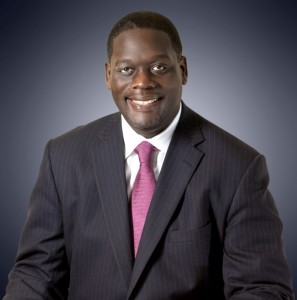
Feb 24, 2012
SUPREME COURT: Conviction of Pennsylvania Death Row Inmate Restored
On February 21 the U.S. Supreme Court reversed a U.S. Court of Appeals decision granting a retrial to James Lambert, who had been convicted and sentenced to death in 1984 in Pennsylvania. Lambert appealed his conviction, claiming that prosecutors never disclosed evidence identifying an additional co-defendant, in violation of Brady v. Maryland. Lambert claimed this new evidence would have impeached the testimony that led to his conviction. The U.S. Court of Appeals for the Third Circuit ruled…
Read More
Feb 23, 2012
LEGISLATION: Virginia Rejects Death Penalty Expansion Bill
On February 22, Virginia’s legislature blocked a bill that would have allowed the death penalty for accomplices to murder who did not actually carry out the killing. The bill would have revised the state’s “triggerman rule,” which allows the death penalty only for the person directly responsible for the actual murder. Two weeks ago, the Senate version of the bill was rejected by the Courts of Justice Committee on a 7 – 7 vote. The House then passed its own version of the bill, forcing the Senate…
Read More
Feb 22, 2012
REPRESENTATION: Pennsylvania Supreme Court Study Finds Death Penalty Compensation “Grossly Inadequate”
A study ordered by the Pennsylvania Supreme Court has found pay for court-appointed defense lawyers in death penalty cases in Philadelphia to be “grossly inadequate.” The study, which was authored by Common Pleas Court Judge Benjamin Lerner, was initiated after defense lawyers petitioned the Court to increase the fees or halt death-penalty cases. The study noted there are fewer than 30 lawyers in Philadelphia willing to take capital-case appointments for indigent clients who meet the state…
Read More
Feb 21, 2012
NEW VOICES: Former Florida Supreme Court Justice Calls for Unanimous Juries in Death Cases
A recent op-ed in the Miami Herald by Raoul Cantero (pictured), former Justice of the Florida Supreme Court, called for state legislators to require unanimity in the penalty phase of death penalty trials. Five years ago, a study conducted by the American Bar Association found that Florida was an outlier in allowing capital juries to find aggravating circumstances and recommend death sentences by a simple majority. The op-ed, co-written by Mark Schlakman, a member of the ABA’s Florida Death…
Read More
Feb 20, 2012
STUDIES: Military Death Sentence More Likely for Defendants of Color
A recent study published in the Journal of Criminal Law and Criminology about the U.S. Military death penalty system found that racial disparities among those sentenced to death are worse in the military than in other criminal courts. The study, conducted by Catherine Grosso of Michigan State’s College of Law, the late David Baldus of the University of Iowa College of Law, and others, reviewed all potentially death-eligible military prosecutions from 1984 to 2005 and identified 105…
Read More
Feb 17, 2012
RACE: First Hearing Under Racial Justice Act Concludes in North Carolina
The first hearing to decide whether there has been significant evidence of racial discrimination in the application of North Carolina’s death penalty was concluded on February 15. Cumberland County Judge Gregory A. Weeks, who presided over the two-and-a-half week hearing, will offer a decision based on the state’s Racial Justice Act in the next few weeks. Much of the historic proceeding focused on whether race played an improper role in jury selection on capital cases around the time of death…
Read MoreFeb 16, 2012
Sentence Near Under Maryland’s New Death Penalty Law
In 2009, Maryland changed its capital punishment law, sharply limiting when the death penalty could be sought. Prosecutors can only pursue the death penalty in cases of first degree murder when there is DNA or other biological evidence linking the defendant to a murder, a video-taped confession by the defendant, or a video linking the defendant to the murder. As the first case testing this statute nears completion, DPIC’s Executive Director, Richard Dieter (pictured), was interviewed on…
Read More
Feb 15, 2012
TIME ON DEATH ROW: Florida to Execute Inmate After Three Decades on Death Row
On February 15, Florida is scheduled to execute Robert Waterhouse, a 65-year-old inmate who was sentenced to death for a 1980 murder in St. Petersburg. Waterhouse has been on Florida’s death row for over three decades, longer than any inmate previously executed by the state. His original death sentence was overturned in 1988 after his appellate attorney argued that Waterhouse’s trial lawyer erred by not presenting the court with important mitigating information. A second jury reaffirmed his…
Read More
Feb 13, 2012
NEW VOICES: Sponsor of California’s 1978 Death Penalty Initiative Now Supports Repeal
Ron Briggs, sponsor of the initiative which expanded California’s death penalty law in 1978, recently announced his support for repeal of the law. Writing in the Los Angeles Times, Ron Briggs explained that the 1978 Briggs Initiative was meant to “give prosecutors better tools for meting out just punishments, and that a broadened statute would serve as a warning to all California evildoers that the state would deliver swift and final justice” and “creat[e] a national model for capital…
Read More