Publications & Testimony
Testimony and Statements on the Death Penalty
FROM DPIC
For testimony by former Executive Director Robert Dunham and former Executive Director Richard C. Dieter, please visit our page DPIC Testimony.
FROM RELIGIOUS LEADERS AND ORGANIZATIONS
- News Brief: Pope Francis Calls for Prayer to Abolish the Death Penalty (September 1, 2022)
- Jewish Congregation Renews Request for Department of Justice to Drop Death Penalty in Tree of Life Synagogue Killings (June 24, 2021)
- Orthodox Church Patriarch Calls Death Penalty Incompatible with Christian Beliefs (October 20, 2020)
- Presbyterian Church (U.S.A.) — Statement on the Federal Death Penalty (August 5, 2019)
- Louisiana Christian Faith Leaders Call for State to Abolish Death Penalty (April 25, 2019)
- Pittsburgh Rabbi’s Wife Opposes Death Penalty for Tree of Life Synagogue Killings (March 18, 2019)
- Orthodox Jewish Organization Calls for an End to Capital Punishment in the U.S. | Death Penalty Information Center (February 17, 2016)
- Baptist Theologian Says Death Penalty Does Not Fit With Christian Theology (March 8, 2016)
- Civil and Human Rights: Death Penalty — Church & Society, The United Methodist Church
- Religious Views: Over 150 Catholic Theologians Call for Repeal of the Death Penalty (September 27, 2011)
- Power Over Life and Death — The Power to Save a Life (January 15, 2005)
- Responsibility, Rehabilitation, and Restoration: A Catholic Perspective on Crime and Criminal Justice (November 2000)
- The Challenge of Holiness: A Sermon on the Death Penalty (January 10, 2000)
- General Assembly of the Texas Conference of Churches — Resolution Opposing the Death Penalty (February 24, 1998)
- Statement by Catholic Bishops of Texas on Capital Punishment (October 20, 1997)
- Catholic Church Expresses Strong Opposition to Capital Punishment in Catechism (September 9, 1997)
- Catholic Bishops of Iowa Issue Statement on Death Penalty (February 4, 1998)
- To End the Death Penalty: A Report of the National Jewish/Catholic Consultation
- Transcript of Dr. Pat Robertson’s Speech on the Role of Religion and the Death Penalty at The College of William and Mary
- Collection of Official Catholic Statements on the Death Penalty (1980)
FROM THE INTERNATIONAL COMMUNITY
- UN experts call for universal abolition of the death penalty | OHCHR (October 9, 2023)
- Zambia Becomes 25th Sub-Saharan African Nation to Abolish Death Penalty (December 23, 2022)
- Belgium Wants a World Without the Death Penalty (October 20, 2022)
- As France Prepares to Assume Presidency of European Union, Emmanuel Macron Announces Initiative for Worldwide Abolition of Death Penalty (October 11, 2021)
- U.N. Secretary-General, European Union Ambassador Call for Abolition of “Barbaric” Death Penalty (October 11, 2017)
- European Union Calls for Abolition of Capital Punishment as World Coalition Hosts International Death Penalty Conference (June 27, 2017)
- U.N. Investigator Talks About the Future of Solitary and the Death Penalty (November 7, 2016)
- World Congress Against the Death Penalty Renews Call for Global Moratorium, Pope Sends Message of Support (June 27, 2016)
- Declaration by the Presidency on behalf of the European Union on the 400th execution in Texas from the Council of the European Union (August 21, 2007)
- Resolution Supporting Worldwide Moratorium on Executions from the United Nations Commission on Human Rights (April 1999)
- Mary Robinson, U.N. High Commissioner for Human Rights — Message to the Press Conference organized by the Death Penalty Information Center for the release of the report, “International Perspectives on the Death Penalty” (October 12, 1999)
- Status of the International Covenants on Human Rights from the United Nations Commission on Human Rights (April 1998)
FROM ADVOCACY GROUPS
- Advocacy Group Tells Supreme Court that Negative Stereotypes Distort Perception that Latinos in Death-Penalty Cases Pose Future Danger to Society (April 15, 2022)
- Disability Rights Groups, Legal Experts, and Conservative Advocates Urge Supreme Court to Strike Down Georgia’s Uniquely Harsh Proof Requirements in Death-Penalty Intellectual Disabilities Cases (January 11, 2022)
- NAACP Reaffirms Its Support of Abolishing the Death Penalty (2022)
- More Than 80 Civil Rights and Advocacy Organizations Urge President Biden to End Federal Executions | Death Penalty Information Center (February 9, 2021)
- More Than 250 Conservative Leaders Join Call to End Death Penalty (October 29, 2019)
- National Alliance on Mental Illness: The Death Penalty
- Florida League of Women Voters Calls for Halt to Executions (May 28, 2007)
- Victims Organizations Issue Joint Statement for National Victims’ Rights Week (April 19, 2007)
FROM JUDGES, LEGISLATORS, AND OTHER ORGANIZATIONS
- Republican-led Oklahoma committee considers pause on executions amid death case scrutiny (October 5, 2023)
- Former Pro-Death Penalty District Attorney Explains Why He Now Supports Abolition, and Fears Political Promises to Expand the Use of the Death Penalty (August 20, 2023)
- Pressley, Durbin Reintroduce Bill to End the Federal Death Penalty (July 13, 2023)
- The Lancet Editorial: Physician Involvement in Executions Violates Medical Ethics | Death Penalty Information Center (May 20, 2023)
- APA calls for extending ineligibility for the death penalty to adolescent offenders younger than age 21 (August 4, 2022)
- Why some Republicans are turning against the death penalty | Ron Ferguson | Ohio House of Representatives (March 8, 2022)
- Eight years on Texas’ highest criminal court turned Elsa Alcala into a death penalty skeptic. How will the court change without her? (January 26, 2019)
- AMA to Supreme Court: Doctor participation in executions unethical (August 22, 2018)
- Former Governor Bill Richardson: Death Penalty Is Bad for Business, Out of Step With World’s Views (June 16, 2017)
- Capital Punishment and Nurses’ Participation in Capital Punishment (2016)
- Former Ohio Attorney General Jim Petro Says Death Penalty Unfixable, “Not Worth It Any More” (September 12, 2016)
- Resolution Supporting Repeal of the Death Penalty, National Hispanic Caucus of State Legislators (August 11, 2016)
- Retired Police Captain Says Repealing Death Penalty Is “Smart on Crime” (November 24, 2014)
- Resolution Supporting Abolition of the Death Penalty, Natl. Assoc. of Black Psychologists (2012)
- The Road to Justice and Peace by New Jersey State Senator Raymond Lesniak (February 1, 2009)
- Statement On The Federal Death Penalty System by Senator Feingold (June 7, 2001)
- Statement on the Need for a Federal Moratorium on the Death Penalty Senator Feingold (October 29, 2000)
- Death Penalty: The Torah and Today (August 23, 2000)
- Press Release for Senator Russ Feingold’s Introduction of Senate’s First Death Penalty Moratorium Bill (April 20, 2000)
- Amnesty International Southern Regional Conference: Orlando, Florida Remarks by Former Florida Chief Justice Gerald Kogan (October 23, 1999)
- American Bar Association Resolution on the Death Penalty (February 3, 1997)
FROM MURDER VICTIMS’ FAMILY MEMBERS
Items: 4881 — 4890
May 16, 2008
Mississippi Preparing to Execute Man Despite Strong Evidence of Mental Retardation
Earl Berry is scheduled to be executed on May 21 in Mississippi, despite evidence that he has mental retardation. Judicial review of this evidence has been denied because his former lawyers failed to file the evidence in a timely fashion. This would be the second execution since the U.S. Supreme Court approved Kentucky’s method of lethal injection on April 16. Last month, a psychologist concluded that Berry had an IQ of 75 or below and “significantly sub-average intellectual functioning and …
Read MoreMay 15, 2008
Maryland Creates Commission to Study Death Penalty
Maryland Governor O’Malley signed legislation creating a commission to study the death penalty on May 13. The Maryland Commission on Capital Punishment is mandated to reflect on all sides of the issue and its members will include representatives from law enforcement, a prosecutor, a public defender, and family members of murder victims. The commission begins its work in July and should submit its findings by December 15, 2008. The following representatives will serve on the commission: Two…
Read MoreMay 14, 2008
BOOKS: The Death Penalty: A Worldwide Perspective
The Death Penalty: A Worldwide Perspective by Roger Hood and Carolyn Hoyle is the Fourth Edition of a text that highlights the latest developments in the death penalty around the world. Roger Hood utilizes his experience as a consultant to the United Nations’ annual survey of capital punishment in compiling a wide range of information from non-governmental organizations and academic literature. The book explores both the advances in legal challenges to the death penalty and the reduction in…
Read More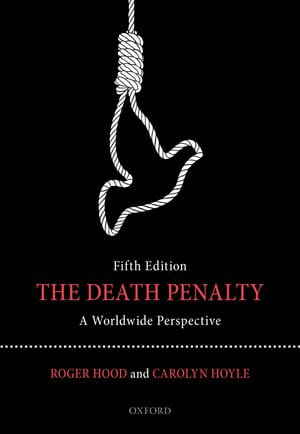
May 14, 2008
NEW VOICES: American Bar Association President Calls for Death Penalty Moratorium
William Neukom, the President of the American Bar Association, recently wrote about the death penalty in conjunction with a visit to Duke University Law School in North Carolina, where he addressed the graduating class. In an op-ed, Mr. Neukom noted that the ABA had closely studied the death penalty systems of eight states and found repeated failures to meet minimum standards advocated by the ABA. He renewed the call of the ABA for a halt to executions until these problems are addressed…
Read MoreMay 13, 2008
U.S. Supreme Court Agrees to Hear Virginia Case on Quality of Representation
On May 12, the U.S. Supreme Court granted certiorari in Bell v. Kelly, No. 07 – 1223, where the petitioner challenged a lower court’s dismissal of his claim of ineffectiveness of counsel. Edward Nathaniel Bell stated that his trial lawyers presented no mitigating evidence on his behalf at his sentencing hearing, despite the existence of many sympathetic facts that might have led a jury to vote for a life sentence. The state court presented with this claim did not hold a hearing on whether Bell…
Read MoreMay 07, 2008
EDITORIALS: “A Death Sentence Voided”
In May 2008, the California Supreme Court threw out the death sentence of convicted murderer Adam Miranda and ordered a new sentencing trial, ruling that Los Angeles County prosecutors failed to disclose key information that likely affected the sentencing of Miranda. A Los Angeles Times editorial highlights the arbitrariness of this case, noting that many defendants without dedicated representation might not have fared so well. This editorial asks about the other inmates on California’s death…
Read MoreMay 07, 2008
NEW VOICES: “How New Jersey Abolished the Death Penalty”
In 1982, as a second term Assemblyman, Raymond Lesniak voted to reinstate the death penalty in New Jersey. In December 2007, New Jersey voted to abolish the death penalty, becoming the first state in 40 years to accomplish this. Senator Lesniak was one of the sponsors and legislative leaders of the abolition bill. He has written a new book: “The Road to Abolition: How New Jersey Abolished the Death Penatly.” In commenting on the book, Senator Lesniak said, “Why do I care so much about the…
Read More
May 07, 2008
Exonerations from Death Row Linked to Inadequate Defense
Recent exonerations from death row, such as the release of Levon Jones in North Carolina on May 3, have been linked to the poor quality of representation some of these inmates received. This raises particular concern as the nation resumed executions on May 6. William Lynd of Georgia was the first person executed since Sept. 25, 2007. But Georgia’s new public defender system has had its budget cut back and has been forced to eliminate more than 40 positions. Robin Maher of the American Bar…
Read MoreMay 06, 2008
First Execution in Seven Months Raises Many Concerns
Georgia is planning to excute William Earl Lynd at 7 PM on May 6. If the lethal injection goes forward, this would be first execution in the U.S. since September 25, 2007. On that day, the U.S. Supreme Court agreed to hear a challenge to the lethal injection process in Baze v. Rees. On April 16, 2008, the Court upheld the process of lethal injection as practiced in Kentucky, signalling a probable end to the 7‑month moratorium on executions. However, the possible resumption of executions comes…
Read MoreMay 05, 2008
Exonerations in Texas Force State to the “Tipping Point”
Eighteen people have been exonerated of serious violent crimes from a single Texas county through DNA-testing in recent years. James Woodward was the latest person to be freed from confinement from Dallas County. He spent 27 years in prison for the wrongful conviction of raping and murdering his girlfriend in 1981. Statewide in Texas there have been 30 such exonerations. As a partial response, state Senator Rodney Ellis has called for a summit on innocence to take place on May 8, beginning in…
Read More