Publications & Testimony
Testimony and Statements on the Death Penalty
FROM DPIC
For testimony by former Executive Director Robert Dunham and former Executive Director Richard C. Dieter, please visit our page DPIC Testimony.
FROM RELIGIOUS LEADERS AND ORGANIZATIONS
- News Brief: Pope Francis Calls for Prayer to Abolish the Death Penalty (September 1, 2022)
- Jewish Congregation Renews Request for Department of Justice to Drop Death Penalty in Tree of Life Synagogue Killings (June 24, 2021)
- Orthodox Church Patriarch Calls Death Penalty Incompatible with Christian Beliefs (October 20, 2020)
- Presbyterian Church (U.S.A.) — Statement on the Federal Death Penalty (August 5, 2019)
- Louisiana Christian Faith Leaders Call for State to Abolish Death Penalty (April 25, 2019)
- Pittsburgh Rabbi’s Wife Opposes Death Penalty for Tree of Life Synagogue Killings (March 18, 2019)
- Orthodox Jewish Organization Calls for an End to Capital Punishment in the U.S. | Death Penalty Information Center (February 17, 2016)
- Baptist Theologian Says Death Penalty Does Not Fit With Christian Theology (March 8, 2016)
- Civil and Human Rights: Death Penalty — Church & Society, The United Methodist Church
- Religious Views: Over 150 Catholic Theologians Call for Repeal of the Death Penalty (September 27, 2011)
- Power Over Life and Death — The Power to Save a Life (January 15, 2005)
- Responsibility, Rehabilitation, and Restoration: A Catholic Perspective on Crime and Criminal Justice (November 2000)
- The Challenge of Holiness: A Sermon on the Death Penalty (January 10, 2000)
- General Assembly of the Texas Conference of Churches — Resolution Opposing the Death Penalty (February 24, 1998)
- Statement by Catholic Bishops of Texas on Capital Punishment (October 20, 1997)
- Catholic Church Expresses Strong Opposition to Capital Punishment in Catechism (September 9, 1997)
- Catholic Bishops of Iowa Issue Statement on Death Penalty (February 4, 1998)
- To End the Death Penalty: A Report of the National Jewish/Catholic Consultation
- Transcript of Dr. Pat Robertson’s Speech on the Role of Religion and the Death Penalty at The College of William and Mary
- Collection of Official Catholic Statements on the Death Penalty (1980)
FROM THE INTERNATIONAL COMMUNITY
- UN experts call for universal abolition of the death penalty | OHCHR (October 9, 2023)
- Zambia Becomes 25th Sub-Saharan African Nation to Abolish Death Penalty (December 23, 2022)
- Belgium Wants a World Without the Death Penalty (October 20, 2022)
- As France Prepares to Assume Presidency of European Union, Emmanuel Macron Announces Initiative for Worldwide Abolition of Death Penalty (October 11, 2021)
- U.N. Secretary-General, European Union Ambassador Call for Abolition of “Barbaric” Death Penalty (October 11, 2017)
- European Union Calls for Abolition of Capital Punishment as World Coalition Hosts International Death Penalty Conference (June 27, 2017)
- U.N. Investigator Talks About the Future of Solitary and the Death Penalty (November 7, 2016)
- World Congress Against the Death Penalty Renews Call for Global Moratorium, Pope Sends Message of Support (June 27, 2016)
- Declaration by the Presidency on behalf of the European Union on the 400th execution in Texas from the Council of the European Union (August 21, 2007)
- Resolution Supporting Worldwide Moratorium on Executions from the United Nations Commission on Human Rights (April 1999)
- Mary Robinson, U.N. High Commissioner for Human Rights — Message to the Press Conference organized by the Death Penalty Information Center for the release of the report, “International Perspectives on the Death Penalty” (October 12, 1999)
- Status of the International Covenants on Human Rights from the United Nations Commission on Human Rights (April 1998)
FROM ADVOCACY GROUPS
- Advocacy Group Tells Supreme Court that Negative Stereotypes Distort Perception that Latinos in Death-Penalty Cases Pose Future Danger to Society (April 15, 2022)
- Disability Rights Groups, Legal Experts, and Conservative Advocates Urge Supreme Court to Strike Down Georgia’s Uniquely Harsh Proof Requirements in Death-Penalty Intellectual Disabilities Cases (January 11, 2022)
- NAACP Reaffirms Its Support of Abolishing the Death Penalty (2022)
- More Than 80 Civil Rights and Advocacy Organizations Urge President Biden to End Federal Executions | Death Penalty Information Center (February 9, 2021)
- More Than 250 Conservative Leaders Join Call to End Death Penalty (October 29, 2019)
- National Alliance on Mental Illness: The Death Penalty
- Florida League of Women Voters Calls for Halt to Executions (May 28, 2007)
- Victims Organizations Issue Joint Statement for National Victims’ Rights Week (April 19, 2007)
FROM JUDGES, LEGISLATORS, AND OTHER ORGANIZATIONS
- Republican-led Oklahoma committee considers pause on executions amid death case scrutiny (October 5, 2023)
- Former Pro-Death Penalty District Attorney Explains Why He Now Supports Abolition, and Fears Political Promises to Expand the Use of the Death Penalty (August 20, 2023)
- Pressley, Durbin Reintroduce Bill to End the Federal Death Penalty (July 13, 2023)
- The Lancet Editorial: Physician Involvement in Executions Violates Medical Ethics | Death Penalty Information Center (May 20, 2023)
- APA calls for extending ineligibility for the death penalty to adolescent offenders younger than age 21 (August 4, 2022)
- Why some Republicans are turning against the death penalty | Ron Ferguson | Ohio House of Representatives (March 8, 2022)
- Eight years on Texas’ highest criminal court turned Elsa Alcala into a death penalty skeptic. How will the court change without her? (January 26, 2019)
- AMA to Supreme Court: Doctor participation in executions unethical (August 22, 2018)
- Former Governor Bill Richardson: Death Penalty Is Bad for Business, Out of Step With World’s Views (June 16, 2017)
- Capital Punishment and Nurses’ Participation in Capital Punishment (2016)
- Former Ohio Attorney General Jim Petro Says Death Penalty Unfixable, “Not Worth It Any More” (September 12, 2016)
- Resolution Supporting Repeal of the Death Penalty, National Hispanic Caucus of State Legislators (August 11, 2016)
- Retired Police Captain Says Repealing Death Penalty Is “Smart on Crime” (November 24, 2014)
- Resolution Supporting Abolition of the Death Penalty, Natl. Assoc. of Black Psychologists (2012)
- The Road to Justice and Peace by New Jersey State Senator Raymond Lesniak (February 1, 2009)
- Statement On The Federal Death Penalty System by Senator Feingold (June 7, 2001)
- Statement on the Need for a Federal Moratorium on the Death Penalty Senator Feingold (October 29, 2000)
- Death Penalty: The Torah and Today (August 23, 2000)
- Press Release for Senator Russ Feingold’s Introduction of Senate’s First Death Penalty Moratorium Bill (April 20, 2000)
- Amnesty International Southern Regional Conference: Orlando, Florida Remarks by Former Florida Chief Justice Gerald Kogan (October 23, 1999)
- American Bar Association Resolution on the Death Penalty (February 3, 1997)
FROM MURDER VICTIMS’ FAMILY MEMBERS
Items: 5231 — 5240
Feb 28, 2007
Maryland Poll Shows Broad Support for Life Without Parole
According to a recent Maryland poll, a large majority of voters in the state support replacing the death penalty with a sentence of life without parole. The poll, conducted by Mason-Dixon Polling & Research, Inc., found that 61% of those surveyed believe that the sentence of life without the possibility of parole is “an acceptable substitute for the death penalty.” Only 27% of respondents disagreed. Support for life without parole in Maryland has jumped nearly 20 percentage points in less than…
Read MoreFeb 28, 2007
France Amends Constitution to Ban the Death Penalty
The French parliament voted to amend the country’s Constitution to include an explicit ban on the death penalty. In a special joint session held at the Palace of Versailles (pictured), France’s National Assembly and Senate passed the amendment by a vote of 828 – 26. The death penalty has been outlawed in France since 1981, but the recently passed amendment officially inscribes the prohibition into the constitution. “We are accomplishing the wish of Victor Hugo in 1848, the pure, simple…
Read MoreFeb 28, 2007
BOOKS: “Last Words From Death Row” Examines Herrera Case
In “Last Words From Death Row: The Walls Unit,” Norma Herrera recounts the tribulations she and her family suffered as they worked to free her brother, Leonel, from death row in Texas. The book documents court events and press coverage of the case and captures the family’s efforts to assist Leonel prior to his execution in 1993, four months after the U.S. Supreme Court held in Herrera v. Collins that, in the absence of other constitutional violations, new evidence of innocence is no reason for…
Read MoreFeb 26, 2007
Montana Senate Votes to Abolish Death Penalty
The Montana Senate has voted to abolish the state’s death penalty law. Supporters of the measure noted that the death penalty does not deter crime, is expensive, increases the suffering of victims’ families who must endure a lengthy mandatory appeals process, and is not applied fairly or accurately. “It’s not right. You can’t do it fairly, you can’t do it with equity, you can’t do it with justice,” said Democratic Senator Steve Gallus. Among the Republican Senators who supported abolition was…
Read MoreFeb 26, 2007
Indiana ABA Assessment Team Calls For Halt to Executions, Issues Recommmendations
The Indiana Death Penalty Assessment Team, under the auspices of the American Bar Association, has called for a halt to executions in the state because of concerns about the arbitrariness of the state’s death penalty. “The seemingly random process of charging decisions, plea agreements, and jury recommendations is just part of a death penalty system that has aptly been called Indiana’s ‘other lottery’,” the group noted in its report. The seven-member Indiana panel was organized by the ABA Death…
Read MoreFeb 23, 2007
BOOKS: “Just Call Me Mike: A Journey to Actor and Activist”
In his new autobiography, “Just Call Me Mike: A Journey to Actor and Activist,” Mike Farrell provides intimate accounts of his life as a television sitcom star and as a human rights activist. Farrell explains how his work on the television program M*A*S*H inspired him to become more involved in politics and human rights issues. Over the years, he has been considered one of Hollywood’s most prominent activists, especially on issues related to capital punishment. Farrell’s work on the death…
Read More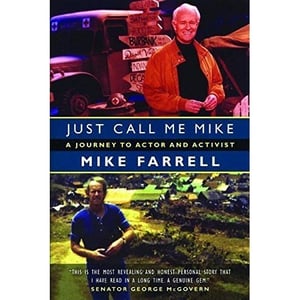
Feb 22, 2007
NEW RESOURCE: Religion and the Death Penalty Web Page
The Death Penalty Information Center’s new Religion and the Death Penalty Web page is now available online. In recent years, a growing number of religious organizations have participated in the nation’s death penalty debate. The purpose of this new Web page is to provide access to information regarding the efforts of these faith groups and to highlight recent developments related to religion and the death penalty. The page features official religious statements on the death penalty from nearly…
Read More
Feb 21, 2007
Maryland Governors call for Abolition of the Death Penalty
Florida Commission Recommends Changes to Lethal Injection Process MARYLAND GOVERNORS CALL FOR ABOLITION OF DEATH PENALTY Maryland Governor Martin O’Malley Notwithstanding the executions of the rightly convicted, can the death penalty ever be justified as public policy when it inherently necessitates the occasional taking of wrongly convicted, innocent life? In Maryland, since 1978, we have executed five people and set one convicted man free when his innocence was discovered. Are any of us…
Read MoreFeb 21, 2007
Third World Congress Against the Death Penalty
The Third World Congress Against the Death Penalty took place in Paris from February 1 – 3, 2007. During this time, Paris welcomed hundreds of death penalty experts and activists from around the world, including numerous U.S. representatives who provided a broad overview of capital punishment trends in the U.S. Among the American panelists who participated in the Congress were: George Kendall, Special Counsel, Holland & Knight, LLP Richard Dieter, DPIC Executive Director Frank Baumgartner…
Read More
Feb 19, 2007
Vatican Says Death Penalty Is “Affront to Human Dignity”
In a position paper issued this month during the World Congress Against the Death Penalty in Paris, the Vatican said that the death penalty “is not only a refusal of the right to life, but it also is an affront to human dignity.” Echoing the Catechism of the Catholic Church, the paper noted that while governments have an obligation to protect their citizens, “today it truly is difficult to justify” using capital punishment when other means of protection, such as life in prison, are possible.
Read More