Publications & Testimony
Testimony and Statements on the Death Penalty
FROM DPIC
For testimony by former Executive Director Robert Dunham and former Executive Director Richard C. Dieter, please visit our page DPIC Testimony.
FROM RELIGIOUS LEADERS AND ORGANIZATIONS
- News Brief: Pope Francis Calls for Prayer to Abolish the Death Penalty (September 1, 2022)
- Jewish Congregation Renews Request for Department of Justice to Drop Death Penalty in Tree of Life Synagogue Killings (June 24, 2021)
- Orthodox Church Patriarch Calls Death Penalty Incompatible with Christian Beliefs (October 20, 2020)
- Presbyterian Church (U.S.A.) — Statement on the Federal Death Penalty (August 5, 2019)
- Louisiana Christian Faith Leaders Call for State to Abolish Death Penalty (April 25, 2019)
- Pittsburgh Rabbi’s Wife Opposes Death Penalty for Tree of Life Synagogue Killings (March 18, 2019)
- Orthodox Jewish Organization Calls for an End to Capital Punishment in the U.S. | Death Penalty Information Center (February 17, 2016)
- Baptist Theologian Says Death Penalty Does Not Fit With Christian Theology (March 8, 2016)
- Civil and Human Rights: Death Penalty — Church & Society, The United Methodist Church
- Religious Views: Over 150 Catholic Theologians Call for Repeal of the Death Penalty (September 27, 2011)
- Power Over Life and Death — The Power to Save a Life (January 15, 2005)
- Responsibility, Rehabilitation, and Restoration: A Catholic Perspective on Crime and Criminal Justice (November 2000)
- The Challenge of Holiness: A Sermon on the Death Penalty (January 10, 2000)
- General Assembly of the Texas Conference of Churches — Resolution Opposing the Death Penalty (February 24, 1998)
- Statement by Catholic Bishops of Texas on Capital Punishment (October 20, 1997)
- Catholic Church Expresses Strong Opposition to Capital Punishment in Catechism (September 9, 1997)
- Catholic Bishops of Iowa Issue Statement on Death Penalty (February 4, 1998)
- To End the Death Penalty: A Report of the National Jewish/Catholic Consultation
- Transcript of Dr. Pat Robertson’s Speech on the Role of Religion and the Death Penalty at The College of William and Mary
- Collection of Official Catholic Statements on the Death Penalty (1980)
FROM THE INTERNATIONAL COMMUNITY
- UN experts call for universal abolition of the death penalty | OHCHR (October 9, 2023)
- Zambia Becomes 25th Sub-Saharan African Nation to Abolish Death Penalty (December 23, 2022)
- Belgium Wants a World Without the Death Penalty (October 20, 2022)
- As France Prepares to Assume Presidency of European Union, Emmanuel Macron Announces Initiative for Worldwide Abolition of Death Penalty (October 11, 2021)
- U.N. Secretary-General, European Union Ambassador Call for Abolition of “Barbaric” Death Penalty (October 11, 2017)
- European Union Calls for Abolition of Capital Punishment as World Coalition Hosts International Death Penalty Conference (June 27, 2017)
- U.N. Investigator Talks About the Future of Solitary and the Death Penalty (November 7, 2016)
- World Congress Against the Death Penalty Renews Call for Global Moratorium, Pope Sends Message of Support (June 27, 2016)
- Declaration by the Presidency on behalf of the European Union on the 400th execution in Texas from the Council of the European Union (August 21, 2007)
- Resolution Supporting Worldwide Moratorium on Executions from the United Nations Commission on Human Rights (April 1999)
- Mary Robinson, U.N. High Commissioner for Human Rights — Message to the Press Conference organized by the Death Penalty Information Center for the release of the report, “International Perspectives on the Death Penalty” (October 12, 1999)
- Status of the International Covenants on Human Rights from the United Nations Commission on Human Rights (April 1998)
FROM ADVOCACY GROUPS
- Advocacy Group Tells Supreme Court that Negative Stereotypes Distort Perception that Latinos in Death-Penalty Cases Pose Future Danger to Society (April 15, 2022)
- Disability Rights Groups, Legal Experts, and Conservative Advocates Urge Supreme Court to Strike Down Georgia’s Uniquely Harsh Proof Requirements in Death-Penalty Intellectual Disabilities Cases (January 11, 2022)
- NAACP Reaffirms Its Support of Abolishing the Death Penalty (2022)
- More Than 80 Civil Rights and Advocacy Organizations Urge President Biden to End Federal Executions | Death Penalty Information Center (February 9, 2021)
- More Than 250 Conservative Leaders Join Call to End Death Penalty (October 29, 2019)
- National Alliance on Mental Illness: The Death Penalty
- Florida League of Women Voters Calls for Halt to Executions (May 28, 2007)
- Victims Organizations Issue Joint Statement for National Victims’ Rights Week (April 19, 2007)
FROM JUDGES, LEGISLATORS, AND OTHER ORGANIZATIONS
- Republican-led Oklahoma committee considers pause on executions amid death case scrutiny (October 5, 2023)
- Former Pro-Death Penalty District Attorney Explains Why He Now Supports Abolition, and Fears Political Promises to Expand the Use of the Death Penalty (August 20, 2023)
- Pressley, Durbin Reintroduce Bill to End the Federal Death Penalty (July 13, 2023)
- The Lancet Editorial: Physician Involvement in Executions Violates Medical Ethics | Death Penalty Information Center (May 20, 2023)
- APA calls for extending ineligibility for the death penalty to adolescent offenders younger than age 21 (August 4, 2022)
- Why some Republicans are turning against the death penalty | Ron Ferguson | Ohio House of Representatives (March 8, 2022)
- Eight years on Texas’ highest criminal court turned Elsa Alcala into a death penalty skeptic. How will the court change without her? (January 26, 2019)
- AMA to Supreme Court: Doctor participation in executions unethical (August 22, 2018)
- Former Governor Bill Richardson: Death Penalty Is Bad for Business, Out of Step With World’s Views (June 16, 2017)
- Capital Punishment and Nurses’ Participation in Capital Punishment (2016)
- Former Ohio Attorney General Jim Petro Says Death Penalty Unfixable, “Not Worth It Any More” (September 12, 2016)
- Resolution Supporting Repeal of the Death Penalty, National Hispanic Caucus of State Legislators (August 11, 2016)
- Retired Police Captain Says Repealing Death Penalty Is “Smart on Crime” (November 24, 2014)
- Resolution Supporting Abolition of the Death Penalty, Natl. Assoc. of Black Psychologists (2012)
- The Road to Justice and Peace by New Jersey State Senator Raymond Lesniak (February 1, 2009)
- Statement On The Federal Death Penalty System by Senator Feingold (June 7, 2001)
- Statement on the Need for a Federal Moratorium on the Death Penalty Senator Feingold (October 29, 2000)
- Death Penalty: The Torah and Today (August 23, 2000)
- Press Release for Senator Russ Feingold’s Introduction of Senate’s First Death Penalty Moratorium Bill (April 20, 2000)
- Amnesty International Southern Regional Conference: Orlando, Florida Remarks by Former Florida Chief Justice Gerald Kogan (October 23, 1999)
- American Bar Association Resolution on the Death Penalty (February 3, 1997)
FROM MURDER VICTIMS’ FAMILY MEMBERS
Items: 5471 — 5480
May 10, 2006
EDITORIALS: Life Without Parole is the Better Option for Wisconsin
A recent editorial in the La Crosse Tribune urged Wisconsin legislators to maintain the state’s ban on capital punishment. The editorial discouraged the state from reinstating capital punishment because it does not deter crime and is often unfairly applied, stating that there is no need to bring back the death penalty because the state already has the sentence of life without parole. Legislators recently voted to hold a non-binding referendum on restoring the death penalty, though the two…
Read MoreMay 08, 2006
BOOKS: A Mother’s Experience with Fetal Alcohol Syndrome and the Death Penalty
Katherine Norgard’s recent book, “Hard to Place: A Crime of Alcohol,” is a personal account of the trauma experienced by her family when her adopted son is charged with a capital crime. The book is the author’s story of fighting to save her son after he was sentenced to death for the 1989 murder of an elderly couple in Tuscon, Arizona. At the time of his trial, she still did not know that her son, John Eastlack, had been born with fetal alcohol syndrome, despite his signs of mental illness. The…
Read MoreMay 08, 2006
Capital Conviction Overturned After Federal Court Finds Judicial Bias Against Defendant
U.S. District Judge Kenneth Hoyt overturned the capital conviction of Carl Wayne Buntion, noting that the Texas trial judge who sentenced him to death had a “deep-seated and vocal bias” against Buntion. In a 61-page opinion, Hoyt stated that state District Judge Bill Harmon deprived Buntion of his constitutional right to a fair trial by bullying his attorneys, meeting privately with prosecutors and deferring to their wishes, and making remarks in court such as he was “doing God’s work” by…
Read MoreMay 08, 2006
LETHAL INJECTION: Inmate on Gurney Tells Guards “It’s not working.”
On May 2, 2006, the execution of Joseph Clark in Ohio was delayed 90 minutes because the execution team was unable to find a suitable vein to deliver the lethal chemicals. After the team tried repeatedly to find a vein, Clark called out, “It’s not working, it’s not working.” The guards closed the curtains to block witnesses from viewing the execution chamber. Witnesses then heard Clark moaning and groaning from behind the curtain. The curtain later reopened after the execution team managed to…
Read MoreMay 08, 2006
Report on the Death Penalty Worldwide
Amnesty International’s most recent death penalty report, “The Death Penalty Worldwide: Developments in 2005,” revealed a substantial drop in recorded executions around the world, as well as a growing number of nations that have abandoned the death penalty. According to the report, four nations accounted for 94% of the 2,148 recorded executions carried out around the world in 2005, a total that is significantly less than the 3,797 executions recorded in 2004 (however, in many countries the…
Read MoreMay 05, 2006
Mounting Evidence of the Declining Use of the Death Penalty in U.S.
The May 8th edition of U.S. News & World Report highlights the declining number of death sentences handed down each year in the U.S., the smaller number of executions, and the growing number of states that are re-evaluating capital punishment. Public support for the death penalty has also decreased because of doubts about the accuracy and fairnes of capital punishment. The article notes that New Jersey recently established a moratorium on executions and New York opted not to restore its death…
Read MoreMay 03, 2006
Federal Jury Gives Moussaoui Life in Prison Without Parole
A federal jury voted today that Zacarias Moussaoui should serve a sentence of life in prison without parole despite the government’s assertion that his lies to FBI officials contributed to the terrorist attacks of September 11, 2001. Earlier the jury had found that Moussaoui was responsible for some of the deaths that took place on September 11, and that he was eligible for the death penalty. After weeks of testimony during the sentencing phase of the trial, the jury took 7 days to recommend a…
Read MoreMay 03, 2006
Arson Experts Dismiss Evidence that Led to Texas Execution
A report compiled by five of the nation’s top arson experts has concluded that Texas executed a man based on faulty science and unreliable evidence. Cameron Todd Willingham was executed in Texas in 2004 for a crime of arson in which his 3 children died. Based on independent reviews of the evidence used to convict Willingham, the experts called for a re-investigation of the case after finding that it was based on interpretations by fire investigators that have been scientifically dispoved. The…
Read MoreMay 03, 2006
NEW VOICES: California Chief Justice Calls Death Penalty “Dysfunctional”
Ronald George (pictured), Chief Justice of the California Supreme Court, recently called the state’s death penalty “dysfunctional” and criticized state lawmakers for their unwillingness to adequately fund the state’s capital punishment system. The Justice noted that this refusal has been “a disservice to the administration of justice.” George added, “I think that there are many, many things in the eyes of legislators that have greater priority. That’s the problem. People want to have the death…
Read More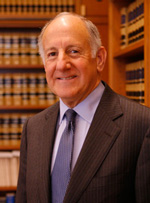
May 02, 2006
Supreme Court Unanimously Rules Death Row Inmate Deprived of a Fair Trial
The U.S. Supreme Court, with Justice Samuel Alito writing his first opinion, unanimously ruled on May 1 that South Carolina had deprived Bobbie Lee Holmes of a fair trial when it prevented him from putting on evidence contradictory to the state’s case and that pointed to another possible suspect. South Carolina’s rule was that if the state had put on strong forensic evidence of the defendant’s guilt, the defendant could be prohibited from raising an alternative theory of a third party’s guilt.
Read More