Publications & Testimony
Testimony and Statements on the Death Penalty
FROM DPIC
For testimony by former Executive Director Robert Dunham and former Executive Director Richard C. Dieter, please visit our page DPIC Testimony.
FROM RELIGIOUS LEADERS AND ORGANIZATIONS
- News Brief: Pope Francis Calls for Prayer to Abolish the Death Penalty (September 1, 2022)
- Jewish Congregation Renews Request for Department of Justice to Drop Death Penalty in Tree of Life Synagogue Killings (June 24, 2021)
- Orthodox Church Patriarch Calls Death Penalty Incompatible with Christian Beliefs (October 20, 2020)
- Presbyterian Church (U.S.A.) — Statement on the Federal Death Penalty (August 5, 2019)
- Louisiana Christian Faith Leaders Call for State to Abolish Death Penalty (April 25, 2019)
- Pittsburgh Rabbi’s Wife Opposes Death Penalty for Tree of Life Synagogue Killings (March 18, 2019)
- Orthodox Jewish Organization Calls for an End to Capital Punishment in the U.S. | Death Penalty Information Center (February 17, 2016)
- Baptist Theologian Says Death Penalty Does Not Fit With Christian Theology (March 8, 2016)
- Civil and Human Rights: Death Penalty — Church & Society, The United Methodist Church
- Religious Views: Over 150 Catholic Theologians Call for Repeal of the Death Penalty (September 27, 2011)
- Power Over Life and Death — The Power to Save a Life (January 15, 2005)
- Responsibility, Rehabilitation, and Restoration: A Catholic Perspective on Crime and Criminal Justice (November 2000)
- The Challenge of Holiness: A Sermon on the Death Penalty (January 10, 2000)
- General Assembly of the Texas Conference of Churches — Resolution Opposing the Death Penalty (February 24, 1998)
- Statement by Catholic Bishops of Texas on Capital Punishment (October 20, 1997)
- Catholic Church Expresses Strong Opposition to Capital Punishment in Catechism (September 9, 1997)
- Catholic Bishops of Iowa Issue Statement on Death Penalty (February 4, 1998)
- To End the Death Penalty: A Report of the National Jewish/Catholic Consultation
- Transcript of Dr. Pat Robertson’s Speech on the Role of Religion and the Death Penalty at The College of William and Mary
- Collection of Official Catholic Statements on the Death Penalty (1980)
FROM THE INTERNATIONAL COMMUNITY
- UN experts call for universal abolition of the death penalty | OHCHR (October 9, 2023)
- Zambia Becomes 25th Sub-Saharan African Nation to Abolish Death Penalty (December 23, 2022)
- Belgium Wants a World Without the Death Penalty (October 20, 2022)
- As France Prepares to Assume Presidency of European Union, Emmanuel Macron Announces Initiative for Worldwide Abolition of Death Penalty (October 11, 2021)
- U.N. Secretary-General, European Union Ambassador Call for Abolition of “Barbaric” Death Penalty (October 11, 2017)
- European Union Calls for Abolition of Capital Punishment as World Coalition Hosts International Death Penalty Conference (June 27, 2017)
- U.N. Investigator Talks About the Future of Solitary and the Death Penalty (November 7, 2016)
- World Congress Against the Death Penalty Renews Call for Global Moratorium, Pope Sends Message of Support (June 27, 2016)
- Declaration by the Presidency on behalf of the European Union on the 400th execution in Texas from the Council of the European Union (August 21, 2007)
- Resolution Supporting Worldwide Moratorium on Executions from the United Nations Commission on Human Rights (April 1999)
- Mary Robinson, U.N. High Commissioner for Human Rights — Message to the Press Conference organized by the Death Penalty Information Center for the release of the report, “International Perspectives on the Death Penalty” (October 12, 1999)
- Status of the International Covenants on Human Rights from the United Nations Commission on Human Rights (April 1998)
FROM ADVOCACY GROUPS
- Advocacy Group Tells Supreme Court that Negative Stereotypes Distort Perception that Latinos in Death-Penalty Cases Pose Future Danger to Society (April 15, 2022)
- Disability Rights Groups, Legal Experts, and Conservative Advocates Urge Supreme Court to Strike Down Georgia’s Uniquely Harsh Proof Requirements in Death-Penalty Intellectual Disabilities Cases (January 11, 2022)
- NAACP Reaffirms Its Support of Abolishing the Death Penalty (2022)
- More Than 80 Civil Rights and Advocacy Organizations Urge President Biden to End Federal Executions | Death Penalty Information Center (February 9, 2021)
- More Than 250 Conservative Leaders Join Call to End Death Penalty (October 29, 2019)
- National Alliance on Mental Illness: The Death Penalty
- Florida League of Women Voters Calls for Halt to Executions (May 28, 2007)
- Victims Organizations Issue Joint Statement for National Victims’ Rights Week (April 19, 2007)
FROM JUDGES, LEGISLATORS, AND OTHER ORGANIZATIONS
- Republican-led Oklahoma committee considers pause on executions amid death case scrutiny (October 5, 2023)
- Former Pro-Death Penalty District Attorney Explains Why He Now Supports Abolition, and Fears Political Promises to Expand the Use of the Death Penalty (August 20, 2023)
- Pressley, Durbin Reintroduce Bill to End the Federal Death Penalty (July 13, 2023)
- The Lancet Editorial: Physician Involvement in Executions Violates Medical Ethics | Death Penalty Information Center (May 20, 2023)
- APA calls for extending ineligibility for the death penalty to adolescent offenders younger than age 21 (August 4, 2022)
- Why some Republicans are turning against the death penalty | Ron Ferguson | Ohio House of Representatives (March 8, 2022)
- Eight years on Texas’ highest criminal court turned Elsa Alcala into a death penalty skeptic. How will the court change without her? (January 26, 2019)
- AMA to Supreme Court: Doctor participation in executions unethical (August 22, 2018)
- Former Governor Bill Richardson: Death Penalty Is Bad for Business, Out of Step With World’s Views (June 16, 2017)
- Capital Punishment and Nurses’ Participation in Capital Punishment (2016)
- Former Ohio Attorney General Jim Petro Says Death Penalty Unfixable, “Not Worth It Any More” (September 12, 2016)
- Resolution Supporting Repeal of the Death Penalty, National Hispanic Caucus of State Legislators (August 11, 2016)
- Retired Police Captain Says Repealing Death Penalty Is “Smart on Crime” (November 24, 2014)
- Resolution Supporting Abolition of the Death Penalty, Natl. Assoc. of Black Psychologists (2012)
- The Road to Justice and Peace by New Jersey State Senator Raymond Lesniak (February 1, 2009)
- Statement On The Federal Death Penalty System by Senator Feingold (June 7, 2001)
- Statement on the Need for a Federal Moratorium on the Death Penalty Senator Feingold (October 29, 2000)
- Death Penalty: The Torah and Today (August 23, 2000)
- Press Release for Senator Russ Feingold’s Introduction of Senate’s First Death Penalty Moratorium Bill (April 20, 2000)
- Amnesty International Southern Regional Conference: Orlando, Florida Remarks by Former Florida Chief Justice Gerald Kogan (October 23, 1999)
- American Bar Association Resolution on the Death Penalty (February 3, 1997)
FROM MURDER VICTIMS’ FAMILY MEMBERS
Items: 881 — 890
Oct 17, 2022
Oklahoma Denies Clemency to Death-Row Prisoner Richard Fairchild Who Suffers from Brain Damage, Hallucinations, and Delusions
In a 4 – 1 vote, the Oklahoma Pardon and Parole Board denied clemency to Richard Fairchild, the third of 25 people the state scheduled for execution between August 2022 and December 2024. Fairchild’s attorneys argued that he was represented at trial by incompetent counsel who never presented evidence of Fairchild’s severe childhood abuse and of his repeated traumatic brain injuries. Fairchild’s clemency petition also detailed the debilitating effects of his serious mental illness and organic…
Read More
Oct 14, 2022
DPIC Releases New Report on Race and the Death Penalty in Oklahoma
The Death Penalty Information Center has released a new report on race and the death penalty in Oklahoma, placing the state’s death penalty system in historical context. The report documents the role that race has played in Oklahoma’s death penalty and details the pervasive impact that racial discrimination continues to have in the administration of capital punishment. Deeply Rooted: How Racial History Informs Oklahoma’s Death Penalty, released October 14, 2022, notes that Oklahoma is at an…
Read More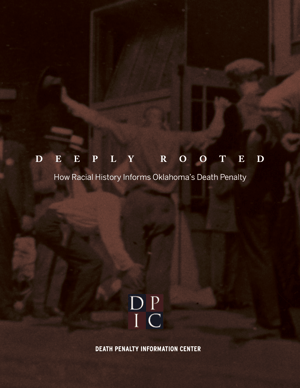
Oct 14, 2022
Deeply Rooted Oklahoma Case Spotlight: Robert Lee Miller, Jr.
Robert Lee Miller, Jr. was wrongfully convicted and held on death row for three years after DNA evidence proved he was innocent. Bob Macy and Joyce Gilchrist both played a role in his wrongful capital conviction.[1] Miller was convicted and sentenced to death in 1998 for the murders and rapes of two elderly women.[2] Gilchrist reported that semen collected from the scene pointed to someone with type‑A blood, and hairs found at the scene were said to have “negroid characteristics.”[3] Miller was…
Read MoreOct 14, 2022
Deeply Rooted Oklahoma Case Spotlight: Malcom Rent Johnson
Malcolm Rent Johnson, a Black man, was tried, convicted, and sentenced to death by an all-white jury for the rape and murder of an elderly white woman in Oklahoma City in 1982.[1] Johnson was tried by Bob Macy, and his conviction was based in part on testimony from Joyce Gilchrist. Johnson was executed in January 2000, only a year before Gilchrist’s widespread misconduct came to light. [2] Doubts about Johnson’s guilt still linger today. At trial, Gilchrist testified that semen found at the…
Read MoreOct 14, 2022
Deeply Rooted Oklahoma Case Spotlight: Tremane Wood
Tremane Wood was convicted and sentenced to death in Oklahoma County in 2004.[1] He was sentenced to death for the murder of Ronnie Wipf during the commission of a robbery, a murder that his brother, Zjaiton “Jake” Wood, admitted committing.[2] However, Jake was represented by a litigation team that worked diligently to secure a life sentence.[3] Meanwhile, Tremane was appointed John Albert, an overworked attorney who was struggling with alcohol and substance use disorders while handling…
Read More
Oct 14, 2022
Ten Facts You Should Know About Oklahoma’s Death Penalty Administration
On October 14, 2022, the Death Penalty Information Center released Deeply Rooted: How Racial History Informs Oklahoma’s Death Penalty, a report placing Oklahoma’s death penalty system in historical context. Below are some of the important facts people should know as the state continues its 25-person execution spree. There have been racial disparities in executions since before Oklahoma was granted statehood. The earliest recorded execution in Oklahoma was in 1841. Of the 39 people executed in…
Read More
Oct 13, 2022
Non-Unanimous Florida Jury Sentences Nikolas Cruz to Life Without Parole for Parkland School Shootings
A non-unanimous Florida jury has returned a verdict of life without parole for Nikolas Cruz, the teen offender convicted of killing 17 people in the February 14, 2018 shooting at Marjory Stoneman Douglas High School (pictured) in Parkland, Florida. The October 13, 2022 verdict, in which three jurors voted to spare Cruz’s life, concluded a six-month sentencing trial. Florida law, like that of nearly every death-penalty state, requires a unanimous jury verdict before a death sentence may be…
Read More
Oct 12, 2022
Supreme Court Hears Argument on Deadline for Texas Death-Row Prisoner to Challenge State Court’s Denial of DNA Testing
The U.S. Supreme Court heard argument on October 11, 2022 on whether a Texas death-row prisoner was time-barred from obtaining federal review of the state’s refusal to grant him DNA testing that could prove his innocence because he waited for the state appeals process to finish before filing his federal lawsuit. The technical issue in Reed v. Goertz is when the two-year time clock began to run on Rodney Reed’s federal civil rights lawsuit alleging that Texas had unconstitutionally denied him…
Read More
Oct 11, 2022
South Carolina Supreme Court to Hear Argument One Month Sooner on Constitutionality of Electric Chair and Firing Squad
The South Carolina Supreme Court will hear argument one month sooner on the state’s appeal of a trial court ruling that declared two of its statutorily methods of execution — death by electric chair and firing squad — unconstitutional. The argument will now be held on December 13, 2022 in the Supreme Court Courtroom in Columbia. Argument initially had been set for January 12, 2023 at Coastal Carolina University. The court did not provide any explanation for the scheduling change. The appeal…
Read More
Oct 07, 2022
Atkins at 20: Assessing the Purported Ban on Executing Individuals with Intellectual Disabilities
In its landmark decision in Atkins v. Virginia in 2002, the U.S. Supreme Court declared that the use of the death penalty against individuals with intellectual disability constituted cruel and unusual punishment in violation of the Eighth Amendment. Twenty years later, however, “there is not just the risk, but the certainty” that states continue to sentence intellectually disabled defendants to death, three legal scholars argue, and the federal courts are letting them get away with it. Cornell…
Read More