Publications & Testimony
Testimony and Statements on the Death Penalty
FROM DPIC
For testimony by former Executive Director Robert Dunham and former Executive Director Richard C. Dieter, please visit our page DPIC Testimony.
FROM RELIGIOUS LEADERS AND ORGANIZATIONS
- News Brief: Pope Francis Calls for Prayer to Abolish the Death Penalty (September 1, 2022)
- Jewish Congregation Renews Request for Department of Justice to Drop Death Penalty in Tree of Life Synagogue Killings (June 24, 2021)
- Orthodox Church Patriarch Calls Death Penalty Incompatible with Christian Beliefs (October 20, 2020)
- Presbyterian Church (U.S.A.) — Statement on the Federal Death Penalty (August 5, 2019)
- Louisiana Christian Faith Leaders Call for State to Abolish Death Penalty (April 25, 2019)
- Pittsburgh Rabbi’s Wife Opposes Death Penalty for Tree of Life Synagogue Killings (March 18, 2019)
- Orthodox Jewish Organization Calls for an End to Capital Punishment in the U.S. | Death Penalty Information Center (February 17, 2016)
- Baptist Theologian Says Death Penalty Does Not Fit With Christian Theology (March 8, 2016)
- Civil and Human Rights: Death Penalty — Church & Society, The United Methodist Church
- Religious Views: Over 150 Catholic Theologians Call for Repeal of the Death Penalty (September 27, 2011)
- Power Over Life and Death — The Power to Save a Life (January 15, 2005)
- Responsibility, Rehabilitation, and Restoration: A Catholic Perspective on Crime and Criminal Justice (November 2000)
- The Challenge of Holiness: A Sermon on the Death Penalty (January 10, 2000)
- General Assembly of the Texas Conference of Churches — Resolution Opposing the Death Penalty (February 24, 1998)
- Statement by Catholic Bishops of Texas on Capital Punishment (October 20, 1997)
- Catholic Church Expresses Strong Opposition to Capital Punishment in Catechism (September 9, 1997)
- Catholic Bishops of Iowa Issue Statement on Death Penalty (February 4, 1998)
- To End the Death Penalty: A Report of the National Jewish/Catholic Consultation
- Transcript of Dr. Pat Robertson’s Speech on the Role of Religion and the Death Penalty at The College of William and Mary
- Collection of Official Catholic Statements on the Death Penalty (1980)
FROM THE INTERNATIONAL COMMUNITY
- UN experts call for universal abolition of the death penalty | OHCHR (October 9, 2023)
- Zambia Becomes 25th Sub-Saharan African Nation to Abolish Death Penalty (December 23, 2022)
- Belgium Wants a World Without the Death Penalty (October 20, 2022)
- As France Prepares to Assume Presidency of European Union, Emmanuel Macron Announces Initiative for Worldwide Abolition of Death Penalty (October 11, 2021)
- U.N. Secretary-General, European Union Ambassador Call for Abolition of “Barbaric” Death Penalty (October 11, 2017)
- European Union Calls for Abolition of Capital Punishment as World Coalition Hosts International Death Penalty Conference (June 27, 2017)
- U.N. Investigator Talks About the Future of Solitary and the Death Penalty (November 7, 2016)
- World Congress Against the Death Penalty Renews Call for Global Moratorium, Pope Sends Message of Support (June 27, 2016)
- Declaration by the Presidency on behalf of the European Union on the 400th execution in Texas from the Council of the European Union (August 21, 2007)
- Resolution Supporting Worldwide Moratorium on Executions from the United Nations Commission on Human Rights (April 1999)
- Mary Robinson, U.N. High Commissioner for Human Rights — Message to the Press Conference organized by the Death Penalty Information Center for the release of the report, “International Perspectives on the Death Penalty” (October 12, 1999)
- Status of the International Covenants on Human Rights from the United Nations Commission on Human Rights (April 1998)
FROM ADVOCACY GROUPS
- Advocacy Group Tells Supreme Court that Negative Stereotypes Distort Perception that Latinos in Death-Penalty Cases Pose Future Danger to Society (April 15, 2022)
- Disability Rights Groups, Legal Experts, and Conservative Advocates Urge Supreme Court to Strike Down Georgia’s Uniquely Harsh Proof Requirements in Death-Penalty Intellectual Disabilities Cases (January 11, 2022)
- NAACP Reaffirms Its Support of Abolishing the Death Penalty (2022)
- More Than 80 Civil Rights and Advocacy Organizations Urge President Biden to End Federal Executions | Death Penalty Information Center (February 9, 2021)
- More Than 250 Conservative Leaders Join Call to End Death Penalty (October 29, 2019)
- National Alliance on Mental Illness: The Death Penalty
- Florida League of Women Voters Calls for Halt to Executions (May 28, 2007)
- Victims Organizations Issue Joint Statement for National Victims’ Rights Week (April 19, 2007)
FROM JUDGES, LEGISLATORS, AND OTHER ORGANIZATIONS
- Republican-led Oklahoma committee considers pause on executions amid death case scrutiny (October 5, 2023)
- Former Pro-Death Penalty District Attorney Explains Why He Now Supports Abolition, and Fears Political Promises to Expand the Use of the Death Penalty (August 20, 2023)
- Pressley, Durbin Reintroduce Bill to End the Federal Death Penalty (July 13, 2023)
- The Lancet Editorial: Physician Involvement in Executions Violates Medical Ethics | Death Penalty Information Center (May 20, 2023)
- APA calls for extending ineligibility for the death penalty to adolescent offenders younger than age 21 (August 4, 2022)
- Why some Republicans are turning against the death penalty | Ron Ferguson | Ohio House of Representatives (March 8, 2022)
- Eight years on Texas’ highest criminal court turned Elsa Alcala into a death penalty skeptic. How will the court change without her? (January 26, 2019)
- AMA to Supreme Court: Doctor participation in executions unethical (August 22, 2018)
- Former Governor Bill Richardson: Death Penalty Is Bad for Business, Out of Step With World’s Views (June 16, 2017)
- Capital Punishment and Nurses’ Participation in Capital Punishment (2016)
- Former Ohio Attorney General Jim Petro Says Death Penalty Unfixable, “Not Worth It Any More” (September 12, 2016)
- Resolution Supporting Repeal of the Death Penalty, National Hispanic Caucus of State Legislators (August 11, 2016)
- Retired Police Captain Says Repealing Death Penalty Is “Smart on Crime” (November 24, 2014)
- Resolution Supporting Abolition of the Death Penalty, Natl. Assoc. of Black Psychologists (2012)
- The Road to Justice and Peace by New Jersey State Senator Raymond Lesniak (February 1, 2009)
- Statement On The Federal Death Penalty System by Senator Feingold (June 7, 2001)
- Statement on the Need for a Federal Moratorium on the Death Penalty Senator Feingold (October 29, 2000)
- Death Penalty: The Torah and Today (August 23, 2000)
- Press Release for Senator Russ Feingold’s Introduction of Senate’s First Death Penalty Moratorium Bill (April 20, 2000)
- Amnesty International Southern Regional Conference: Orlando, Florida Remarks by Former Florida Chief Justice Gerald Kogan (October 23, 1999)
- American Bar Association Resolution on the Death Penalty (February 3, 1997)
FROM MURDER VICTIMS’ FAMILY MEMBERS
Items: 2001 — 2010
Mar 20, 2019
Federal Court Orders Alabama to Release Execution Protocol
In a victory for the media and advocates of open government, a unanimous three-judge panel of the U.S. Court of Appeals for the Eleventh Circuit ruled on March 18, 2019 that Alabama must disclose key portions of its highly secretive lethal-injection execution protocol to the public. The Associated Press, the Montgomery Advertiser, and Alabama Media Group had sued for access to the protocol, which came under intense scrutiny in the wake of Alabama’s failed attempt to execute Doyle Lee Hamm…
Read More
Mar 19, 2019
Supreme Court Refuses to Hear Georgia Death-Penalty Case Involving Racist Juror
For the second time in just over one month, the United States Supreme Court has cleared the way for the execution of an African-American prisoner in the face of strong evidence of racial or religious bias. On March 18, 2019, the Court unanimously declined to hear an appeal from Georgia death-row prisoner Keith Tharpe (pictured), who argued his death sentence was unconstitutionally tainted by the participation of racist white juror who called him a “ni***er” and questioned “if black people even…
Read More
Mar 18, 2019
Pittsburgh Rabbi’s Wife Opposes Death Penalty for Tree of Life Synagogue Killings
Beth Kissileff (pictured), a writer and the wife of a rabbi who survived the shooting rampage that killed eleven worshippers at Pittsburgh’s Tree of Life synagogue, has asked the U.S. Department of Justice not to seek the death penalty against the man charged with committing those murders. In an opinion article for the Religion News Service, Kissileff wrote that she and her husband, Rabbi Jonathan Perlman of Pittsburgh’s New Light Congregation, engaged federal prosecutors and a social worker…
Read More
Mar 18, 2019
Resentencing Status of Florida Prisoners Sentenced to Die by Nonunanimous Juries
This page tracks the 145 Florida death-sentenced prisoners who won relief under Hurst v. Florida (2016) because 1) their jury recommendations for death were not unanimous, and 2) their convictions became final after Ring v. Arizona (2002), which established that juries must find each aggravating factor necessary to impose death. With the help of attorney and researcher Melanie Kalmanson of Tracking Florida’s Death Penalty, DPI has updated this page through January 12, 2026. Professors Michael…
Read MoreMar 15, 2019
NEW VOICES: Prosecutors in Colorado and Nevada Call for Death-Penalty Repeal
Two prosecutors with different philosophical perspectives on capital punishment have called on their respective states to abolish capital punishment. Boulder County, Colorado, District Attorney Michael Dougherty (pictured, left), who opposes capital punishment in principle, and former Washoe County, Nevada, homicide prosecutor Thomas E. Viloria (pictured, right), who has successfully obtained four death verdicts, have added their voices to support efforts to repeal the death penalty in their…
Read More
Mar 15, 2019
Lethal Injection News
This is an archival page. To see updated news, please view the lethal injection news and developments feed here. On March 15, 2019, a Nebraska federal district court ruled that the state Department of Correctional Services must disclose documents relating to how it obtained the fentanyl it used in the August 2018 execution of Carey Dean Moore. The order was issued in connection with efforts by Arkansas death-row prisoners to show that fentanyl was available as an alternative to…
Read MoreMar 15, 2019
Flowers v. Mississippi: Oral Argument Briefing
On June 21, 2019, the United States Supreme Court vacated Curtis Flowers’ conviction in a 7 – 2 decision. For more information about the opinion, read DPIC’s summary here. See also Supreme Court Vacates Conviction in Mississippi Death Penalty Case Finding Race Discrimination in Jury Selection. Pre-Oral Argument Summary Mississippi death-row prisoner Curtis Giovanni Flowers has been tried six times for a quadruple murder in Winona, Mississippi. His first three trials were reversed because of…
Read More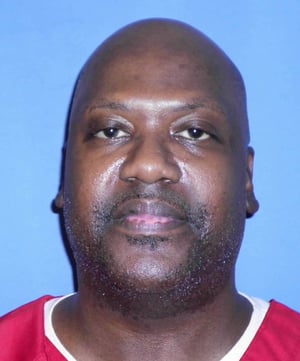
Mar 14, 2019
NEW PODCAST: The Race Study that Convinced the Court to Declare Washington’s Death Penalty Unconstitutional
In October 2018, the Washington Supreme Court unanimously struck down the state’s death penalty, finding that it had been “imposed in an arbitrary and racially biased manner.” In reaching its decision in State v. Gregory, the court relied upon a study of twenty-five years of Washington State capital prosecutions that demonstrated that Washington juries were 4.5 times more likely to impose a death sentence on a black defendant than on a white defendant in a similar case. The authors of that…
Read More
Mar 13, 2019
California Governor Announces Moratorium on Executions
California Governor Gavin Newsom on March 13, 2019 declared a moratorium on executions in the state with the nation’s largest death row. Newsom implemented the moratorium through an executive order granting reprieves to the 737 prisoners currently on California’s death row. He also announced that he was withdrawing the state’s execution protocol — the administrative plan by which executions are carried out — and was closing down the state’s execution chamber. In his executive order imposing the…
Read More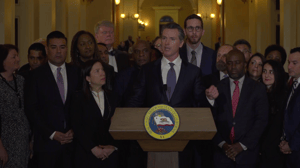
Mar 13, 2019
Statements from Governors Imposing Moratoria on Executions
In the past few years, the governors of California, Pennsylvania, Washington, Colorado, and Oregon have put a halt to executions in their states because of problems in the death penalty system. Below are some of the reasons they gave for for their actions. Governor Gavin Newsom, California, March 13, 2019 “Our death penalty system has been, by all measures, a failure. It has discriminated against defendants who are mentally ill, black and brown, or can’t afford expensive legal representation.
Read More