Publications & Testimony
Testimony and Statements on the Death Penalty
FROM DPIC
For testimony by former Executive Director Robert Dunham and former Executive Director Richard C. Dieter, please visit our page DPIC Testimony.
FROM RELIGIOUS LEADERS AND ORGANIZATIONS
- News Brief: Pope Francis Calls for Prayer to Abolish the Death Penalty (September 1, 2022)
- Jewish Congregation Renews Request for Department of Justice to Drop Death Penalty in Tree of Life Synagogue Killings (June 24, 2021)
- Orthodox Church Patriarch Calls Death Penalty Incompatible with Christian Beliefs (October 20, 2020)
- Presbyterian Church (U.S.A.) — Statement on the Federal Death Penalty (August 5, 2019)
- Louisiana Christian Faith Leaders Call for State to Abolish Death Penalty (April 25, 2019)
- Pittsburgh Rabbi’s Wife Opposes Death Penalty for Tree of Life Synagogue Killings (March 18, 2019)
- Orthodox Jewish Organization Calls for an End to Capital Punishment in the U.S. | Death Penalty Information Center (February 17, 2016)
- Baptist Theologian Says Death Penalty Does Not Fit With Christian Theology (March 8, 2016)
- Civil and Human Rights: Death Penalty — Church & Society, The United Methodist Church
- Religious Views: Over 150 Catholic Theologians Call for Repeal of the Death Penalty (September 27, 2011)
- Power Over Life and Death — The Power to Save a Life (January 15, 2005)
- Responsibility, Rehabilitation, and Restoration: A Catholic Perspective on Crime and Criminal Justice (November 2000)
- The Challenge of Holiness: A Sermon on the Death Penalty (January 10, 2000)
- General Assembly of the Texas Conference of Churches — Resolution Opposing the Death Penalty (February 24, 1998)
- Statement by Catholic Bishops of Texas on Capital Punishment (October 20, 1997)
- Catholic Church Expresses Strong Opposition to Capital Punishment in Catechism (September 9, 1997)
- Catholic Bishops of Iowa Issue Statement on Death Penalty (February 4, 1998)
- To End the Death Penalty: A Report of the National Jewish/Catholic Consultation
- Transcript of Dr. Pat Robertson’s Speech on the Role of Religion and the Death Penalty at The College of William and Mary
- Collection of Official Catholic Statements on the Death Penalty (1980)
FROM THE INTERNATIONAL COMMUNITY
- UN experts call for universal abolition of the death penalty | OHCHR (October 9, 2023)
- Zambia Becomes 25th Sub-Saharan African Nation to Abolish Death Penalty (December 23, 2022)
- Belgium Wants a World Without the Death Penalty (October 20, 2022)
- As France Prepares to Assume Presidency of European Union, Emmanuel Macron Announces Initiative for Worldwide Abolition of Death Penalty (October 11, 2021)
- U.N. Secretary-General, European Union Ambassador Call for Abolition of “Barbaric” Death Penalty (October 11, 2017)
- European Union Calls for Abolition of Capital Punishment as World Coalition Hosts International Death Penalty Conference (June 27, 2017)
- U.N. Investigator Talks About the Future of Solitary and the Death Penalty (November 7, 2016)
- World Congress Against the Death Penalty Renews Call for Global Moratorium, Pope Sends Message of Support (June 27, 2016)
- Declaration by the Presidency on behalf of the European Union on the 400th execution in Texas from the Council of the European Union (August 21, 2007)
- Resolution Supporting Worldwide Moratorium on Executions from the United Nations Commission on Human Rights (April 1999)
- Mary Robinson, U.N. High Commissioner for Human Rights — Message to the Press Conference organized by the Death Penalty Information Center for the release of the report, “International Perspectives on the Death Penalty” (October 12, 1999)
- Status of the International Covenants on Human Rights from the United Nations Commission on Human Rights (April 1998)
FROM ADVOCACY GROUPS
- Advocacy Group Tells Supreme Court that Negative Stereotypes Distort Perception that Latinos in Death-Penalty Cases Pose Future Danger to Society (April 15, 2022)
- Disability Rights Groups, Legal Experts, and Conservative Advocates Urge Supreme Court to Strike Down Georgia’s Uniquely Harsh Proof Requirements in Death-Penalty Intellectual Disabilities Cases (January 11, 2022)
- NAACP Reaffirms Its Support of Abolishing the Death Penalty (2022)
- More Than 80 Civil Rights and Advocacy Organizations Urge President Biden to End Federal Executions | Death Penalty Information Center (February 9, 2021)
- More Than 250 Conservative Leaders Join Call to End Death Penalty (October 29, 2019)
- National Alliance on Mental Illness: The Death Penalty
- Florida League of Women Voters Calls for Halt to Executions (May 28, 2007)
- Victims Organizations Issue Joint Statement for National Victims’ Rights Week (April 19, 2007)
FROM JUDGES, LEGISLATORS, AND OTHER ORGANIZATIONS
- Republican-led Oklahoma committee considers pause on executions amid death case scrutiny (October 5, 2023)
- Former Pro-Death Penalty District Attorney Explains Why He Now Supports Abolition, and Fears Political Promises to Expand the Use of the Death Penalty (August 20, 2023)
- Pressley, Durbin Reintroduce Bill to End the Federal Death Penalty (July 13, 2023)
- The Lancet Editorial: Physician Involvement in Executions Violates Medical Ethics | Death Penalty Information Center (May 20, 2023)
- APA calls for extending ineligibility for the death penalty to adolescent offenders younger than age 21 (August 4, 2022)
- Why some Republicans are turning against the death penalty | Ron Ferguson | Ohio House of Representatives (March 8, 2022)
- Eight years on Texas’ highest criminal court turned Elsa Alcala into a death penalty skeptic. How will the court change without her? (January 26, 2019)
- AMA to Supreme Court: Doctor participation in executions unethical (August 22, 2018)
- Former Governor Bill Richardson: Death Penalty Is Bad for Business, Out of Step With World’s Views (June 16, 2017)
- Capital Punishment and Nurses’ Participation in Capital Punishment (2016)
- Former Ohio Attorney General Jim Petro Says Death Penalty Unfixable, “Not Worth It Any More” (September 12, 2016)
- Resolution Supporting Repeal of the Death Penalty, National Hispanic Caucus of State Legislators (August 11, 2016)
- Retired Police Captain Says Repealing Death Penalty Is “Smart on Crime” (November 24, 2014)
- Resolution Supporting Abolition of the Death Penalty, Natl. Assoc. of Black Psychologists (2012)
- The Road to Justice and Peace by New Jersey State Senator Raymond Lesniak (February 1, 2009)
- Statement On The Federal Death Penalty System by Senator Feingold (June 7, 2001)
- Statement on the Need for a Federal Moratorium on the Death Penalty Senator Feingold (October 29, 2000)
- Death Penalty: The Torah and Today (August 23, 2000)
- Press Release for Senator Russ Feingold’s Introduction of Senate’s First Death Penalty Moratorium Bill (April 20, 2000)
- Amnesty International Southern Regional Conference: Orlando, Florida Remarks by Former Florida Chief Justice Gerald Kogan (October 23, 1999)
- American Bar Association Resolution on the Death Penalty (February 3, 1997)
FROM MURDER VICTIMS’ FAMILY MEMBERS
Items: 2471 — 2480
Jun 13, 2017
Supporting Data for 2017 DPIC Study of Murder Rates and Killings of Police
We wanted to find out what homicide numbers and trends would tell us about whether the death penalty deterred murders and, more specifically, what kind of impact — if any — it had in deterring killings of law enforcement in the line of duty. How We Classified the States We broke the states down into three categories that we thought would tell us something different about whether the death penalty was a deterrent and created four comparison groups: United States: the country as a whole.
Read MoreJun 13, 2017
Arizona Makes Key Concessions, Reaches Deal With Prisoners to Settle Lethal-Injection Lawsuit
Death-row prisoners and the state of Arizona have reached a tentative settlement to address the state’s lethal-injection protocol. Under the settlement, which could have an impact on lethal-injection litigation across the country, Arizona has dropped a three-drug formula from its protocol in favor of using a high dose of single barbiturate, and will honor a prior commitment not to use the sedative midazolam. The state also agreed not to use any paralytic drug in the execution process — which…
Read More
Jun 12, 2017
Kentucky Attorneys Argue to Expand Juvenile Death Penalty Exemption, Citing Neurological Studies
Defense attorneys for Travis Bredhold, a Kentucky defendant facing the death penalty for a murder committed when he was 18 years old, are asking a judge to extend the death-penalty exemption for juvenile offenders to those younger than age 21. In 2005, the U.S. Supreme Court (pictured) ruled in Roper v. Simmons that the death penalty was unconstitutionally cruel and unusual punishment when applied to offenders who were under age 18 at the time of the crime. The Court held at that time that a…
Read More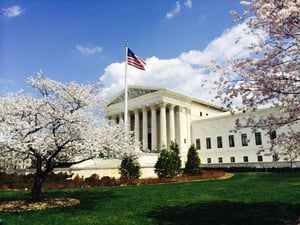
Jun 09, 2017
Duane Buck’s Lawyer Discusses How Future Dangerousness Taints Texas Death Penalty System
Thirty years ago, filmmaker Errol Morris, who directed the documentary “The Thin Blue Line,” helped to exonerate Texas death-row prisoner Dale Adams, falsely accused of murdering a police officer. During the course of making the film, Morris met the notorious Texas prosecution psychiatrist, Dr. James Grigson, who routinely testified that capital defendants — including the innocent Mr. Adams — posed a risk of future dangerousness. Morris recently interviewed Christina Swarns (pictured, center)…
Read More
Jun 09, 2017
Ayestas v. Davis: Briefing Page
QUESTION PRESENTED: Whether the Fifth Circuit erred in holding that 18 U.S.C. § 3599(f) withholds “reasonably necessary” resources to investigate and develop an ineffective- assistance-of-counsel claim that state habeas counsel forfeited, where the claimant’s existing evidence does not meet the ultimate burden of proof at the time the § 3599(f) motion is made. * * * * * On October 30, the Supreme Court held oral argument in Ayestas v. Davis. The Petitioner, Carlos Ayestas, was convicted and…
Read More
Jun 08, 2017
BOOKS: “Exonerated” Tells the Story of the Innocence Movement
Exonerated: A History of the Innocence Movement, by Robert J. Norris, describes the rise of the “innocence movement,” the lawyers, investigators, journalists, lawmakers, and organizations that have worked to uncover wrongful convictions, educate the public about the problem, and reform the criminal justice system to prevent future mistakes. For the book, Norris interviewed 37 key leaders on the issue, including Innocence Project co-founders Barry Scheck and Peter Neufeld, and Rob Warden…
Read More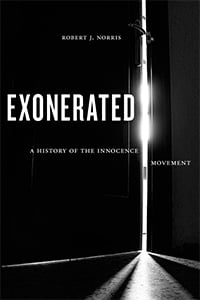
Jun 07, 2017
Death Sentence Commuted, Kevin Keith Presses Innocence Claim in Ohio Appeals Court
An Ohio appeals court heard argument on June 6 on whether to grant a new trial to former death-row prisoner Kevin Keith (pictured), whose death sentence was commuted to life without parole by Ohio Governor Ted Strickland in 2010 amid concerns that he may be innocent. Keith, who has consistently maintained his innocence of the three 1994 murders for which he was sentenced to death, presented argument to the Ohio Court of Appeals for the 3rd District based on newly discovered evidence that the…
Read More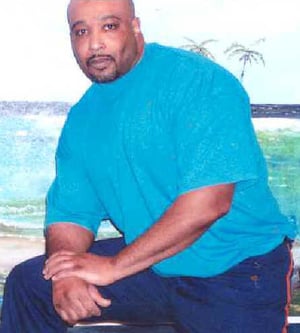
Jun 06, 2017
Recent Jury Trials in Dallas Highlight Death Penalty Decline Across Texas
From 2007 to 2013, Dallas sentenced twelve capitally charged defendants to death — more than any other county in Texas — and Dallas ranks second nationally, behind only Harris County (Houston), in the number it has executed since 1972. But the county has not imposed any new death sentences since then, and the recent life sentences in the capital trials of Justin Smith and Erbie Bowser highlight a statewide trend away from the death penalty. Smith was charged with killing three and injuring two…
Read More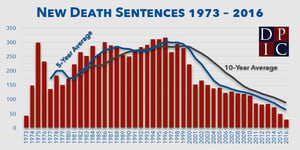
Jun 05, 2017
Federal Court Grants Lethal-Injection Stay to Alabama Prisoner With Claims of Attorney Abandonment, Flawed Forensics
Robert Melson (pictured), an Alabama death-row prisoner whose clemency petition alleges that abandonment by his post-conviction lawyers prevented him from adequately challenging the flawed forensic evidence in his case, received a stay of execution from the U.S. Court of Appeals for the 11th Circuit on a challenge to Alabama’s lethal-injection protocol. Melson was convicted of three murders at a Popeye’s restaurant in 1994. A survivor of the crime recognized one of two assailants as Cuhuatemoc…
Read More
Jun 02, 2017
Indiana Appeals Court Voids State’s Lethal-Injection Protocol
The Indiana Court of Appeals has voided the state’s lethal-injection protocol. In a ruling on June 1, 2017, the state intermediate appeals court held that the Indiana Department of Corrections (DOC) had failed to comply with state rulemaking procedures when it adopted a never-before-used execution protocol without public notice or comment. In 2014, the DOC announced that it had adopted a new execution protocol “informally as an internal DOC policy.” The protocol called for a three-drug…
Read More