Publications & Testimony
Testimony and Statements on the Death Penalty
FROM DPIC
For testimony by former Executive Director Robert Dunham and former Executive Director Richard C. Dieter, please visit our page DPIC Testimony.
FROM RELIGIOUS LEADERS AND ORGANIZATIONS
- News Brief: Pope Francis Calls for Prayer to Abolish the Death Penalty (September 1, 2022)
- Jewish Congregation Renews Request for Department of Justice to Drop Death Penalty in Tree of Life Synagogue Killings (June 24, 2021)
- Orthodox Church Patriarch Calls Death Penalty Incompatible with Christian Beliefs (October 20, 2020)
- Presbyterian Church (U.S.A.) — Statement on the Federal Death Penalty (August 5, 2019)
- Louisiana Christian Faith Leaders Call for State to Abolish Death Penalty (April 25, 2019)
- Pittsburgh Rabbi’s Wife Opposes Death Penalty for Tree of Life Synagogue Killings (March 18, 2019)
- Orthodox Jewish Organization Calls for an End to Capital Punishment in the U.S. | Death Penalty Information Center (February 17, 2016)
- Baptist Theologian Says Death Penalty Does Not Fit With Christian Theology (March 8, 2016)
- Civil and Human Rights: Death Penalty — Church & Society, The United Methodist Church
- Religious Views: Over 150 Catholic Theologians Call for Repeal of the Death Penalty (September 27, 2011)
- Power Over Life and Death — The Power to Save a Life (January 15, 2005)
- Responsibility, Rehabilitation, and Restoration: A Catholic Perspective on Crime and Criminal Justice (November 2000)
- The Challenge of Holiness: A Sermon on the Death Penalty (January 10, 2000)
- General Assembly of the Texas Conference of Churches — Resolution Opposing the Death Penalty (February 24, 1998)
- Statement by Catholic Bishops of Texas on Capital Punishment (October 20, 1997)
- Catholic Church Expresses Strong Opposition to Capital Punishment in Catechism (September 9, 1997)
- Catholic Bishops of Iowa Issue Statement on Death Penalty (February 4, 1998)
- To End the Death Penalty: A Report of the National Jewish/Catholic Consultation
- Transcript of Dr. Pat Robertson’s Speech on the Role of Religion and the Death Penalty at The College of William and Mary
- Collection of Official Catholic Statements on the Death Penalty (1980)
FROM THE INTERNATIONAL COMMUNITY
- UN experts call for universal abolition of the death penalty | OHCHR (October 9, 2023)
- Zambia Becomes 25th Sub-Saharan African Nation to Abolish Death Penalty (December 23, 2022)
- Belgium Wants a World Without the Death Penalty (October 20, 2022)
- As France Prepares to Assume Presidency of European Union, Emmanuel Macron Announces Initiative for Worldwide Abolition of Death Penalty (October 11, 2021)
- U.N. Secretary-General, European Union Ambassador Call for Abolition of “Barbaric” Death Penalty (October 11, 2017)
- European Union Calls for Abolition of Capital Punishment as World Coalition Hosts International Death Penalty Conference (June 27, 2017)
- U.N. Investigator Talks About the Future of Solitary and the Death Penalty (November 7, 2016)
- World Congress Against the Death Penalty Renews Call for Global Moratorium, Pope Sends Message of Support (June 27, 2016)
- Declaration by the Presidency on behalf of the European Union on the 400th execution in Texas from the Council of the European Union (August 21, 2007)
- Resolution Supporting Worldwide Moratorium on Executions from the United Nations Commission on Human Rights (April 1999)
- Mary Robinson, U.N. High Commissioner for Human Rights — Message to the Press Conference organized by the Death Penalty Information Center for the release of the report, “International Perspectives on the Death Penalty” (October 12, 1999)
- Status of the International Covenants on Human Rights from the United Nations Commission on Human Rights (April 1998)
FROM ADVOCACY GROUPS
- Advocacy Group Tells Supreme Court that Negative Stereotypes Distort Perception that Latinos in Death-Penalty Cases Pose Future Danger to Society (April 15, 2022)
- Disability Rights Groups, Legal Experts, and Conservative Advocates Urge Supreme Court to Strike Down Georgia’s Uniquely Harsh Proof Requirements in Death-Penalty Intellectual Disabilities Cases (January 11, 2022)
- NAACP Reaffirms Its Support of Abolishing the Death Penalty (2022)
- More Than 80 Civil Rights and Advocacy Organizations Urge President Biden to End Federal Executions | Death Penalty Information Center (February 9, 2021)
- More Than 250 Conservative Leaders Join Call to End Death Penalty (October 29, 2019)
- National Alliance on Mental Illness: The Death Penalty
- Florida League of Women Voters Calls for Halt to Executions (May 28, 2007)
- Victims Organizations Issue Joint Statement for National Victims’ Rights Week (April 19, 2007)
FROM JUDGES, LEGISLATORS, AND OTHER ORGANIZATIONS
- Republican-led Oklahoma committee considers pause on executions amid death case scrutiny (October 5, 2023)
- Former Pro-Death Penalty District Attorney Explains Why He Now Supports Abolition, and Fears Political Promises to Expand the Use of the Death Penalty (August 20, 2023)
- Pressley, Durbin Reintroduce Bill to End the Federal Death Penalty (July 13, 2023)
- The Lancet Editorial: Physician Involvement in Executions Violates Medical Ethics | Death Penalty Information Center (May 20, 2023)
- APA calls for extending ineligibility for the death penalty to adolescent offenders younger than age 21 (August 4, 2022)
- Why some Republicans are turning against the death penalty | Ron Ferguson | Ohio House of Representatives (March 8, 2022)
- Eight years on Texas’ highest criminal court turned Elsa Alcala into a death penalty skeptic. How will the court change without her? (January 26, 2019)
- AMA to Supreme Court: Doctor participation in executions unethical (August 22, 2018)
- Former Governor Bill Richardson: Death Penalty Is Bad for Business, Out of Step With World’s Views (June 16, 2017)
- Capital Punishment and Nurses’ Participation in Capital Punishment (2016)
- Former Ohio Attorney General Jim Petro Says Death Penalty Unfixable, “Not Worth It Any More” (September 12, 2016)
- Resolution Supporting Repeal of the Death Penalty, National Hispanic Caucus of State Legislators (August 11, 2016)
- Retired Police Captain Says Repealing Death Penalty Is “Smart on Crime” (November 24, 2014)
- Resolution Supporting Abolition of the Death Penalty, Natl. Assoc. of Black Psychologists (2012)
- The Road to Justice and Peace by New Jersey State Senator Raymond Lesniak (February 1, 2009)
- Statement On The Federal Death Penalty System by Senator Feingold (June 7, 2001)
- Statement on the Need for a Federal Moratorium on the Death Penalty Senator Feingold (October 29, 2000)
- Death Penalty: The Torah and Today (August 23, 2000)
- Press Release for Senator Russ Feingold’s Introduction of Senate’s First Death Penalty Moratorium Bill (April 20, 2000)
- Amnesty International Southern Regional Conference: Orlando, Florida Remarks by Former Florida Chief Justice Gerald Kogan (October 23, 1999)
- American Bar Association Resolution on the Death Penalty (February 3, 1997)
FROM MURDER VICTIMS’ FAMILY MEMBERS
Items: 3311 — 3320
May 14, 2014
Texas Execution Stayed Over Intellectual Disability Claim
The U.S. Court of Appeals for the Fifth Circuit stayed the execution of Robert Campbell just hours before he was scheduled to be executed in Texas on May 13, granting him permission to file a new petition on his claim of mental retardation. If Campbell is intellectually disabled, he is barred from execution by the Supreme Court’s 2002 ruling in Atkins v. Virginia. The unanimous three-judge panel noted that Texas authorities had withheld IQ test results from Campbell and misled his attorneys…
Read More
May 13, 2014
NEW VOICES: “Death Penalty Has Had Its Day in North Carolina”
Mark Edwards, chair of the Nash County (North Carolina) Republican Party, recently spoke about replacing the death penalty with a sentence of life without parole: “As a conservative seeking to find the best way to protect the residents of this great state from crime, I believe the death penalty has had its day in North Carolina. It is time to begin the debate on replacing the death penalty with life in prison without parole.” He also said, “We are advocating that we replace the death penalty…
Read More
May 12, 2014
NEW VOICES: Sen. Tom Coburn of Oklahoma Would Bypass Death Penalty
Republican Senator Tom Coburn of Oklahoma recently said he believes the April 29 execution of Clayton Lockett, “was certainly not done appropriately.” Coburn, who is also a physician, added, “It’s an unfortunate thing but, again, anytime you’re doing anything with the body, things can go wrong.” He also spoke more broadly about his views on the death penalty, saying, “I don’t like it. I wish we put everybody that had such a history as this gentleman behind bars working and doing things that…
Read More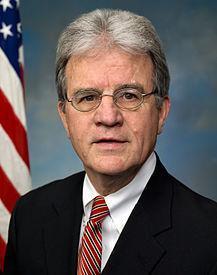
May 09, 2014
Florida Passes Bill to Compensate Exonerated Death Row Inmate
As the last act of its legislative session, the Florida Senate passed a bill allowing the state to compensate James Richardson, who had been wrongfully sentenced to death and incarcerated for 21 years. In 1967, Richardson, who is black, was convicted and sentenced to death by an all-white jury for the murder of his seven children. Many years later, a former babysitter confessed to the crime, prompting an investigation that revealed that witnesses had been beaten to convince them to falsely…
Read More
May 08, 2014
EDITORIALS: “State-Sponsored Horror in Oklahoma”
A recent New York Times editorial described the “horrific scene” of Clayton Lockett’s botched execution and called on Oklahoma to “[follow] other governors and legislatures in banning executions, recognizing that the American administration of death does not function.” The editors noted the Oklahoma Supreme Court’s temporary halt to the execution and pointed to political pressure as a possible explanation for why the Court then allowed it to go forward: “[S]everal lawmakers threatened to…
Read More
May 07, 2014
Blue Ribbon Panel Recommends Extensive Changes to Death Penalty
On May 7, the Constitution Project released a new report, Irreversible Error, calling for reforms in many aspects of the death penalty system. The Project’s Death Penalty Committee, which consists of renowned experts on capital punishment, made suggestions for reducing the risk of executing the innocent and improving the fairness of capital cases from arrest and interrogation, through prosecution and appeals, to the execution procedure itself. “Without substantial revisions — not only to lethal…
Read More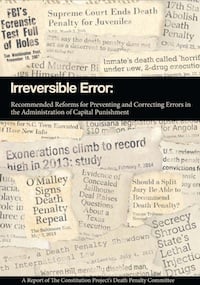
May 06, 2014
Support for Death Penalty Declines in Houston, Texas, As Population Diversifies
A recent survey by the Kinder Institute of Houston, Texas, found that more than two-thirds (69%) of area residents preferred alternative sentences over the death penalty, and that number is growing as the population becomes more diverse. The survey asked whether persons convicted of first-degree murder should receive a death sentence, life in prison without parole, or life with the possibility of parole after 25 years. Only 28% of respondents chose the death penalty. Life without parole was the…
Read More
May 05, 2014
President Obama Orders Review of Death Penalty
President Obama has ordered Attorney General Eric Holder to review the application of the death penalty in the U.S. following the failed execution of Clayton Lockett in Oklahoma on April 29. The President noted concerns about innocence and racial bias: “In the application of the death penalty in this country, we have seen significant problems — racial bias, uneven application of the death penalty, you know, situations in which there were individuals on death row who later on were discovered to…
Read More
May 02, 2014
CLEMENCY: Ohio Governor Commutes Death Sentence, Citing ‘Troubling Irregularities’
On April 30 Ohio Governor John Kasich commuted the death sentence of Arthur Tyler to life in prison without the possibility of parole. The decision followed a recommendation for clemency from Cuyahoga County prosecutor Tim McGinty. Following a hearing on the case, the Ohio Parole Board recommended commutation of Tyler’s sentence to life with parole: six of the eleven members recommended immediate parole eligibility for Tyler, and the remaining five favored a sentence of 33 years to life, which…
Read More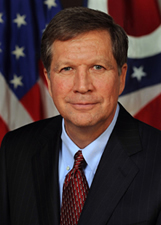
May 01, 2014
NEW VOICES: Former Oklahoma Warden Says Death Penalty Fails on Many Fronts
Randy Workman (pictured) is a former warden of the Oklahoma State Penitentiary, where he oversaw 32 executions. In a recent interview, he was critical of many aspects of capital punishment. He said the death penalty failed the victims’ families and wasted money: “We spend millions of dollars on these cases and going through the process and the end result is the family, do they feel vindicated? I’d say 90% of the time the people I’ve seen don’t.” He shared the advice he gave to a murder victim’s…
Read More