Publications & Testimony
Testimony and Statements on the Death Penalty
FROM DPIC
For testimony by former Executive Director Robert Dunham and former Executive Director Richard C. Dieter, please visit our page DPIC Testimony.
FROM RELIGIOUS LEADERS AND ORGANIZATIONS
- News Brief: Pope Francis Calls for Prayer to Abolish the Death Penalty (September 1, 2022)
- Jewish Congregation Renews Request for Department of Justice to Drop Death Penalty in Tree of Life Synagogue Killings (June 24, 2021)
- Orthodox Church Patriarch Calls Death Penalty Incompatible with Christian Beliefs (October 20, 2020)
- Presbyterian Church (U.S.A.) — Statement on the Federal Death Penalty (August 5, 2019)
- Louisiana Christian Faith Leaders Call for State to Abolish Death Penalty (April 25, 2019)
- Pittsburgh Rabbi’s Wife Opposes Death Penalty for Tree of Life Synagogue Killings (March 18, 2019)
- Orthodox Jewish Organization Calls for an End to Capital Punishment in the U.S. | Death Penalty Information Center (February 17, 2016)
- Baptist Theologian Says Death Penalty Does Not Fit With Christian Theology (March 8, 2016)
- Civil and Human Rights: Death Penalty — Church & Society, The United Methodist Church
- Religious Views: Over 150 Catholic Theologians Call for Repeal of the Death Penalty (September 27, 2011)
- Power Over Life and Death — The Power to Save a Life (January 15, 2005)
- Responsibility, Rehabilitation, and Restoration: A Catholic Perspective on Crime and Criminal Justice (November 2000)
- The Challenge of Holiness: A Sermon on the Death Penalty (January 10, 2000)
- General Assembly of the Texas Conference of Churches — Resolution Opposing the Death Penalty (February 24, 1998)
- Statement by Catholic Bishops of Texas on Capital Punishment (October 20, 1997)
- Catholic Church Expresses Strong Opposition to Capital Punishment in Catechism (September 9, 1997)
- Catholic Bishops of Iowa Issue Statement on Death Penalty (February 4, 1998)
- To End the Death Penalty: A Report of the National Jewish/Catholic Consultation
- Transcript of Dr. Pat Robertson’s Speech on the Role of Religion and the Death Penalty at The College of William and Mary
- Collection of Official Catholic Statements on the Death Penalty (1980)
FROM THE INTERNATIONAL COMMUNITY
- UN experts call for universal abolition of the death penalty | OHCHR (October 9, 2023)
- Zambia Becomes 25th Sub-Saharan African Nation to Abolish Death Penalty (December 23, 2022)
- Belgium Wants a World Without the Death Penalty (October 20, 2022)
- As France Prepares to Assume Presidency of European Union, Emmanuel Macron Announces Initiative for Worldwide Abolition of Death Penalty (October 11, 2021)
- U.N. Secretary-General, European Union Ambassador Call for Abolition of “Barbaric” Death Penalty (October 11, 2017)
- European Union Calls for Abolition of Capital Punishment as World Coalition Hosts International Death Penalty Conference (June 27, 2017)
- U.N. Investigator Talks About the Future of Solitary and the Death Penalty (November 7, 2016)
- World Congress Against the Death Penalty Renews Call for Global Moratorium, Pope Sends Message of Support (June 27, 2016)
- Declaration by the Presidency on behalf of the European Union on the 400th execution in Texas from the Council of the European Union (August 21, 2007)
- Resolution Supporting Worldwide Moratorium on Executions from the United Nations Commission on Human Rights (April 1999)
- Mary Robinson, U.N. High Commissioner for Human Rights — Message to the Press Conference organized by the Death Penalty Information Center for the release of the report, “International Perspectives on the Death Penalty” (October 12, 1999)
- Status of the International Covenants on Human Rights from the United Nations Commission on Human Rights (April 1998)
FROM ADVOCACY GROUPS
- Advocacy Group Tells Supreme Court that Negative Stereotypes Distort Perception that Latinos in Death-Penalty Cases Pose Future Danger to Society (April 15, 2022)
- Disability Rights Groups, Legal Experts, and Conservative Advocates Urge Supreme Court to Strike Down Georgia’s Uniquely Harsh Proof Requirements in Death-Penalty Intellectual Disabilities Cases (January 11, 2022)
- NAACP Reaffirms Its Support of Abolishing the Death Penalty (2022)
- More Than 80 Civil Rights and Advocacy Organizations Urge President Biden to End Federal Executions | Death Penalty Information Center (February 9, 2021)
- More Than 250 Conservative Leaders Join Call to End Death Penalty (October 29, 2019)
- National Alliance on Mental Illness: The Death Penalty
- Florida League of Women Voters Calls for Halt to Executions (May 28, 2007)
- Victims Organizations Issue Joint Statement for National Victims’ Rights Week (April 19, 2007)
FROM JUDGES, LEGISLATORS, AND OTHER ORGANIZATIONS
- Republican-led Oklahoma committee considers pause on executions amid death case scrutiny (October 5, 2023)
- Former Pro-Death Penalty District Attorney Explains Why He Now Supports Abolition, and Fears Political Promises to Expand the Use of the Death Penalty (August 20, 2023)
- Pressley, Durbin Reintroduce Bill to End the Federal Death Penalty (July 13, 2023)
- The Lancet Editorial: Physician Involvement in Executions Violates Medical Ethics | Death Penalty Information Center (May 20, 2023)
- APA calls for extending ineligibility for the death penalty to adolescent offenders younger than age 21 (August 4, 2022)
- Why some Republicans are turning against the death penalty | Ron Ferguson | Ohio House of Representatives (March 8, 2022)
- Eight years on Texas’ highest criminal court turned Elsa Alcala into a death penalty skeptic. How will the court change without her? (January 26, 2019)
- AMA to Supreme Court: Doctor participation in executions unethical (August 22, 2018)
- Former Governor Bill Richardson: Death Penalty Is Bad for Business, Out of Step With World’s Views (June 16, 2017)
- Capital Punishment and Nurses’ Participation in Capital Punishment (2016)
- Former Ohio Attorney General Jim Petro Says Death Penalty Unfixable, “Not Worth It Any More” (September 12, 2016)
- Resolution Supporting Repeal of the Death Penalty, National Hispanic Caucus of State Legislators (August 11, 2016)
- Retired Police Captain Says Repealing Death Penalty Is “Smart on Crime” (November 24, 2014)
- Resolution Supporting Abolition of the Death Penalty, Natl. Assoc. of Black Psychologists (2012)
- The Road to Justice and Peace by New Jersey State Senator Raymond Lesniak (February 1, 2009)
- Statement On The Federal Death Penalty System by Senator Feingold (June 7, 2001)
- Statement on the Need for a Federal Moratorium on the Death Penalty Senator Feingold (October 29, 2000)
- Death Penalty: The Torah and Today (August 23, 2000)
- Press Release for Senator Russ Feingold’s Introduction of Senate’s First Death Penalty Moratorium Bill (April 20, 2000)
- Amnesty International Southern Regional Conference: Orlando, Florida Remarks by Former Florida Chief Justice Gerald Kogan (October 23, 1999)
- American Bar Association Resolution on the Death Penalty (February 3, 1997)
FROM MURDER VICTIMS’ FAMILY MEMBERS
Items: 3491 — 3500
Aug 20, 2013
BOOKS: “The Corruption of Innocence” — the Joseph O’Dell Story
A new book by Lori St John, The Corruption of Innocence: A Journey to Justice, recounts the author’s quest to save the life of Joseph O’Dell because of her strong belief in his innocence. St John describes the resistance she experienced in trying to have crime-related items tested for DNA evidence, and the international support that O’Dell attracted while on death row. O’Dell was executed in Virginia in 1997. Among those who had expressed doubts about O’Dell’s guilt were three Justices of the…
Read More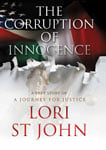
Aug 19, 2013
LETHAL INJECTION: Many States Are Searching for New Execution Drugs
Many states are seeking alternative ways to carry out executions by lethal injection. Missouri announced it intends to use the anesthetic propofol, though no other state has used this drug and the drug’s manufacturer has strongly objected to such use. Officials in Texas and Ohio announced they will be changing their execution protocols in the near future because their current execution drug (pentobarbital) is expiring and is no longer available for this use. In June, officials in California…
Read More
Aug 16, 2013
ARBITRARINESS: An Attorney’s Story of Her Client’s Death
Vicki Werneke is a federal public defender who represented Billy Slagle on Ohio’s death row. She recently wrote about her frenzied work during the last weekend before Slagle’s death on August 4. She noted that he was only 18 and highly intoxicated at the time of his crime. He had been remorseful ever since, trying to do some good with his life while on death row. Even the District Attorney of the county that prosecuted him supported a reprieve, making this a strong case for clemency. On the…
Read More
Aug 15, 2013
Repeated Execution Dates Called Psychological Torture
According to some experts, the process of repeatedly submitting a person to imminent execution is a form of psychological torture that should be banned. The Center for Constitutional Rights has said that “the intense strain of repeatedly coming within hours or days of execution” is torture. Citing the case of Troy Davis, who was executed in Georgia in 2011 after repeated execution dates and stays, the Center remarked, “Is there any significant difference between mock executions, long…
Read More
Aug 14, 2013
STUDIES: FBI Preliminary Crime Report for 2012
The Federal Bureau of Investigation recently released the preliminary findings of its annual Uniform Crime Report for 2012. The final report will likely be published in October, but the initial statistics indicate the number of murders in the U.S. increased slightly by 1.5% from 2011. Three regions of the country showed an increase in murders, while one region declined. Murders in the Northeast decreased by 4.4%. The number of murders increased by 3.3% in the Midwest, 2.5% in the South, and…
Read More
Aug 13, 2013
BOOKS: “A Wild Justice” Explores the Cases and Politics That Led to Today’s Death Penalty
In his new book, A Wild Justice, Evan J. Mandery (pictured) explores the political complexities and personalities that led to the Supreme Court’s decisions in Furman v. Georgia — striking down the death penalty in 1972 — and Gregg v. Georgia — allowing it to resume in 1976. He describes in great detail the work of the NAACP Legal Defense Fund and the gifted attorneys, such as Anthony Amsterdam, who led the way through this groundbreaking period. Mandery summarizes the struggles this way: “The death…
Read More
Aug 12, 2013
STUDIES: Texas To Re-Examine Previous Convictions for Forensic Errors
The Texas Forensic Science Commission announced it will study prior criminal convictions to determine whether mistakes were made using discredited forensic testimony. The Commission will employ DNA testing to review cases in which microscopic hair fibers were used to convict people of rape, murder, robbery, and other crimes. It has recently been established that it is impossible to match a hair under a microscope to a specific person. Forensic experts can make an “association” between a sample…
Read More
Aug 09, 2013
Resources for Students and Teachers Returning to School
As the start of the new school year approaches, we wanted to remind educators and students of the excellent free resources DPIC offers. Our college curriculum, Capital Punishment in Context, uses a case-study model to introduce students to the death penalty system and allows them to access more in-depth research on a variety of topics, such as innocence, race, and mental illness. Each case includes relevant links to outside resources, including scholarly articles. Our High School Curriculum…
Read More
Aug 08, 2013
False Confessions and Threats of the Death Penalty
A recent article in The Atlantic by Marc Bookman (pictured) shows how threats of the death penalty can contribute to false confessions. The piece recounts a Pennsylvania murder case in which two defendants, Russell Weinberger and Felix Rodriguez, admitted to a murder they did not commit, leading to their imprisonment for over 21 years. Rodriguez described his interrogation: “First they showed me pictures of the dead guy. I started to cry. I said I didn’t do that. That’s when they slapped me on…
Read More
Aug 07, 2013
Special Master in Missouri Finds Prosecutors Hid Evidence of Coerced Confession
On August 7, the Special Master assigned to review the case of Reginald Clemons (pictured) in Missouri announced that prosecutors withheld evidence indicating detectives beat Clemons into confessing to rape and murder that led to his death sentence. Clemons recanted the confession, but a tape of it was played at trial and he was convicted in 1993. No physical evidence linked him to the rape. Judge Michael Manners, who conducted special evidentiary hearings on Clemons’s possible innocence, said…
Read More