Publications & Testimony
Testimony and Statements on the Death Penalty
FROM DPIC
For testimony by former Executive Director Robert Dunham and former Executive Director Richard C. Dieter, please visit our page DPIC Testimony.
FROM RELIGIOUS LEADERS AND ORGANIZATIONS
- News Brief: Pope Francis Calls for Prayer to Abolish the Death Penalty (September 1, 2022)
- Jewish Congregation Renews Request for Department of Justice to Drop Death Penalty in Tree of Life Synagogue Killings (June 24, 2021)
- Orthodox Church Patriarch Calls Death Penalty Incompatible with Christian Beliefs (October 20, 2020)
- Presbyterian Church (U.S.A.) — Statement on the Federal Death Penalty (August 5, 2019)
- Louisiana Christian Faith Leaders Call for State to Abolish Death Penalty (April 25, 2019)
- Pittsburgh Rabbi’s Wife Opposes Death Penalty for Tree of Life Synagogue Killings (March 18, 2019)
- Orthodox Jewish Organization Calls for an End to Capital Punishment in the U.S. | Death Penalty Information Center (February 17, 2016)
- Baptist Theologian Says Death Penalty Does Not Fit With Christian Theology (March 8, 2016)
- Civil and Human Rights: Death Penalty — Church & Society, The United Methodist Church
- Religious Views: Over 150 Catholic Theologians Call for Repeal of the Death Penalty (September 27, 2011)
- Power Over Life and Death — The Power to Save a Life (January 15, 2005)
- Responsibility, Rehabilitation, and Restoration: A Catholic Perspective on Crime and Criminal Justice (November 2000)
- The Challenge of Holiness: A Sermon on the Death Penalty (January 10, 2000)
- General Assembly of the Texas Conference of Churches — Resolution Opposing the Death Penalty (February 24, 1998)
- Statement by Catholic Bishops of Texas on Capital Punishment (October 20, 1997)
- Catholic Church Expresses Strong Opposition to Capital Punishment in Catechism (September 9, 1997)
- Catholic Bishops of Iowa Issue Statement on Death Penalty (February 4, 1998)
- To End the Death Penalty: A Report of the National Jewish/Catholic Consultation
- Transcript of Dr. Pat Robertson’s Speech on the Role of Religion and the Death Penalty at The College of William and Mary
- Collection of Official Catholic Statements on the Death Penalty (1980)
FROM THE INTERNATIONAL COMMUNITY
- UN experts call for universal abolition of the death penalty | OHCHR (October 9, 2023)
- Zambia Becomes 25th Sub-Saharan African Nation to Abolish Death Penalty (December 23, 2022)
- Belgium Wants a World Without the Death Penalty (October 20, 2022)
- As France Prepares to Assume Presidency of European Union, Emmanuel Macron Announces Initiative for Worldwide Abolition of Death Penalty (October 11, 2021)
- U.N. Secretary-General, European Union Ambassador Call for Abolition of “Barbaric” Death Penalty (October 11, 2017)
- European Union Calls for Abolition of Capital Punishment as World Coalition Hosts International Death Penalty Conference (June 27, 2017)
- U.N. Investigator Talks About the Future of Solitary and the Death Penalty (November 7, 2016)
- World Congress Against the Death Penalty Renews Call for Global Moratorium, Pope Sends Message of Support (June 27, 2016)
- Declaration by the Presidency on behalf of the European Union on the 400th execution in Texas from the Council of the European Union (August 21, 2007)
- Resolution Supporting Worldwide Moratorium on Executions from the United Nations Commission on Human Rights (April 1999)
- Mary Robinson, U.N. High Commissioner for Human Rights — Message to the Press Conference organized by the Death Penalty Information Center for the release of the report, “International Perspectives on the Death Penalty” (October 12, 1999)
- Status of the International Covenants on Human Rights from the United Nations Commission on Human Rights (April 1998)
FROM ADVOCACY GROUPS
- Advocacy Group Tells Supreme Court that Negative Stereotypes Distort Perception that Latinos in Death-Penalty Cases Pose Future Danger to Society (April 15, 2022)
- Disability Rights Groups, Legal Experts, and Conservative Advocates Urge Supreme Court to Strike Down Georgia’s Uniquely Harsh Proof Requirements in Death-Penalty Intellectual Disabilities Cases (January 11, 2022)
- NAACP Reaffirms Its Support of Abolishing the Death Penalty (2022)
- More Than 80 Civil Rights and Advocacy Organizations Urge President Biden to End Federal Executions | Death Penalty Information Center (February 9, 2021)
- More Than 250 Conservative Leaders Join Call to End Death Penalty (October 29, 2019)
- National Alliance on Mental Illness: The Death Penalty
- Florida League of Women Voters Calls for Halt to Executions (May 28, 2007)
- Victims Organizations Issue Joint Statement for National Victims’ Rights Week (April 19, 2007)
FROM JUDGES, LEGISLATORS, AND OTHER ORGANIZATIONS
- Republican-led Oklahoma committee considers pause on executions amid death case scrutiny (October 5, 2023)
- Former Pro-Death Penalty District Attorney Explains Why He Now Supports Abolition, and Fears Political Promises to Expand the Use of the Death Penalty (August 20, 2023)
- Pressley, Durbin Reintroduce Bill to End the Federal Death Penalty (July 13, 2023)
- The Lancet Editorial: Physician Involvement in Executions Violates Medical Ethics | Death Penalty Information Center (May 20, 2023)
- APA calls for extending ineligibility for the death penalty to adolescent offenders younger than age 21 (August 4, 2022)
- Why some Republicans are turning against the death penalty | Ron Ferguson | Ohio House of Representatives (March 8, 2022)
- Eight years on Texas’ highest criminal court turned Elsa Alcala into a death penalty skeptic. How will the court change without her? (January 26, 2019)
- AMA to Supreme Court: Doctor participation in executions unethical (August 22, 2018)
- Former Governor Bill Richardson: Death Penalty Is Bad for Business, Out of Step With World’s Views (June 16, 2017)
- Capital Punishment and Nurses’ Participation in Capital Punishment (2016)
- Former Ohio Attorney General Jim Petro Says Death Penalty Unfixable, “Not Worth It Any More” (September 12, 2016)
- Resolution Supporting Repeal of the Death Penalty, National Hispanic Caucus of State Legislators (August 11, 2016)
- Retired Police Captain Says Repealing Death Penalty Is “Smart on Crime” (November 24, 2014)
- Resolution Supporting Abolition of the Death Penalty, Natl. Assoc. of Black Psychologists (2012)
- The Road to Justice and Peace by New Jersey State Senator Raymond Lesniak (February 1, 2009)
- Statement On The Federal Death Penalty System by Senator Feingold (June 7, 2001)
- Statement on the Need for a Federal Moratorium on the Death Penalty Senator Feingold (October 29, 2000)
- Death Penalty: The Torah and Today (August 23, 2000)
- Press Release for Senator Russ Feingold’s Introduction of Senate’s First Death Penalty Moratorium Bill (April 20, 2000)
- Amnesty International Southern Regional Conference: Orlando, Florida Remarks by Former Florida Chief Justice Gerald Kogan (October 23, 1999)
- American Bar Association Resolution on the Death Penalty (February 3, 1997)
FROM MURDER VICTIMS’ FAMILY MEMBERS
Items: 4101 — 4110
Apr 14, 2011
COSTS: Federal Government Spending Millions Pursuing Death Penalty for Inmate with Life Sentence
An expensive federal death penalty trial under way in New York illustrates many of the concerns about such prosecutions. New York is a state that no longer has its own death penalty. Nevertheless, the federal government is seeking a death sentence for Vincent Basciano, who is already serving life without parole. Because the death penalty is being sought, the case has already costs millions of dollars and the final bill will likely be $10 million or more. Moreover, the chief witness against…
Read MoreApr 13, 2011
Key Connecticut Committee Approves Death Penalty Repeal Bill
On April 12, the Connecticut legislature’s Judiciary Committee approved (26 – 17) a bill to repeal the death penalty for future crimes and replace the sentence with life without parole. Supporters of the bill said it would avoid the risk of wrongful executions and save taxpayers the costs of lengthy trials and appeals. Both supporters and opponents of capital punishment agreed that the state’s current system is not working. Sen. Eric Coleman said the state’s justice system “is not infallible.” He…
Read More
Apr 12, 2011
BOOKS: “Queer (In)Justice: The Criminalization of LGBT People in the United States”
A new book, “Queer (In)Justice” by Joey Mogul, Andrea Ritchie, and Kay Whitlock, explores the experiences of lesbian, gay, bisexual, and transgender people in America’s criminal justice system, and particularly their interaction with the death penalty system. The authors assert that prosecutors have used defendants’ sexual orientation or gender-nonconforming appearance to obtain capital convictions: “In capital cases a prosecutor must successfully undertake what should be a morally difficult…
Read MoreApr 11, 2011
OP-ED: “The Prosecution Rests, but I Can’t”
A recent op-ed in the New York Times by John Thompson (pictured, right) describes his anguish after being wrongly convicted, sentenced to death, and most recently denied financial compensation in Louisiana. He spent 18 years in prison, including 14 on death row, because prosecutors deliberately withheld evidence that could have led to his acquittal. Thompson wrote, “The prosecutors involved in my two cases, from the office of the Orleans Parish district attorney, Harry Connick Sr., helped to…
Read More
Apr 08, 2011
STUDIES: Victims’ Families React Negatively to Serving as Basis for Death Penalty
A recent study by Professors Thomas Mowen and Ryan Schroeder of the University of Louisville found that public support for the death penalty has shifted away from traditional justifications (such as its purported deterrent effect, its imagined cost-saving value, and its safeguard of innocent lives), and has been replaced by rationales of retribution and closure on behalf of victims’ families. According to the study, which was published in Western Criminology Review, “with this change in…
Read MoreApr 07, 2011
LETHAL INJECTION: Latest Foreign Supplier of Drugs for U.S. Executions Refuses to Continue
When the sole U.S. supplier of a drug used by all death penalty states announced it was halting production earlier this year, many states turned to sources overseas. In particular, Nebraska obtained a large quantity of the drug — sodium thiopental — from a company in Mumbai, India. Now that company has announced it will no longer supply the drug for use in lethal injections. In a statement released to the media, Kayem Pharmaceutical Pvt. Ltd. said, “In view of the sensitivity involved with sale of…
Read MoreApr 06, 2011
U.S. Supreme Court Restores Death Sentence Despite Questionable Representation
On April 4, the U.S. Supreme Court reversed the opinions of two lower federal courts that had granted a new sentencing hearing to Scott Pinholster, who is on death row in California. The U.S. Court of Appeals for the Ninth Circuit had held that Pinholster’s attorneys provided inadequate representation in not investigating evidence of severe brain damage. The attorneys should have pursued medical evidence that Pinholster was an epileptic who suffered blows to the head in two car accidents. He…
Read More
Apr 05, 2011
Supreme Court Erases Award for Exonerated Death Row Inmate
On March 29, the U.S. Supreme Court reversed (5 – 4) a judgment of $14 million against the District Attorney’s Office of New Orleans for withholding evidence in the case of John Thompson. Thompson had been convicted and sentenced to death but was later exonerated after the withheld evidence, casting serious doubt about his guilt, was revealed through the work of a private investigator. Thompson spent 18 years in prison including 14 years on death row, and faced imminent execution several times.
Read More
Apr 04, 2011
STUDIES: New Report – Animals Put to Death with Greater Care Than Humans in Texas
As Texas prepares to execute Cleve Foster on April 5, a new report released by the ACLU of Texas and Northwestern University’s Center for International Human Rights reveals that procedures for euthanizing animals in the state are more carefully regulated than the protocol for executing death row inmates. In March, Texas announced that it will continue to use a risky three-drug protocol for executions, and will replace the critical first drug, which is in short supply, with a new drug…
Read More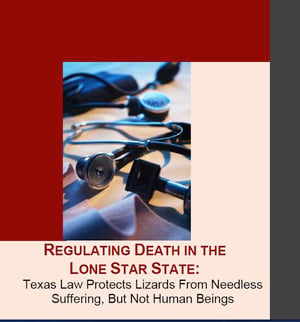
Apr 01, 2011
STUDIES: North Carolina’s Death Penalty is Error-Prone and Rarely Applied
A new study from North Carolina shows that the state’s death penalty is error-prone and rarely implemented. A study of the death penalty from 1977 to 2009 found that two out of three death sentences were overturned on appeal, an error rate of 67%. The study also found that only 20% of death sentences resulted in an execution. The review of the state’s death penalty was made by Matthew Robinson, a professor of Government & Justice Studies at Appalachian State University. He made a series of…
Read More