Publications & Testimony
Testimony and Statements on the Death Penalty
FROM DPIC
For testimony by former Executive Director Robert Dunham and former Executive Director Richard C. Dieter, please visit our page DPIC Testimony.
FROM RELIGIOUS LEADERS AND ORGANIZATIONS
- News Brief: Pope Francis Calls for Prayer to Abolish the Death Penalty (September 1, 2022)
- Jewish Congregation Renews Request for Department of Justice to Drop Death Penalty in Tree of Life Synagogue Killings (June 24, 2021)
- Orthodox Church Patriarch Calls Death Penalty Incompatible with Christian Beliefs (October 20, 2020)
- Presbyterian Church (U.S.A.) — Statement on the Federal Death Penalty (August 5, 2019)
- Louisiana Christian Faith Leaders Call for State to Abolish Death Penalty (April 25, 2019)
- Pittsburgh Rabbi’s Wife Opposes Death Penalty for Tree of Life Synagogue Killings (March 18, 2019)
- Orthodox Jewish Organization Calls for an End to Capital Punishment in the U.S. | Death Penalty Information Center (February 17, 2016)
- Baptist Theologian Says Death Penalty Does Not Fit With Christian Theology (March 8, 2016)
- Civil and Human Rights: Death Penalty — Church & Society, The United Methodist Church
- Religious Views: Over 150 Catholic Theologians Call for Repeal of the Death Penalty (September 27, 2011)
- Power Over Life and Death — The Power to Save a Life (January 15, 2005)
- Responsibility, Rehabilitation, and Restoration: A Catholic Perspective on Crime and Criminal Justice (November 2000)
- The Challenge of Holiness: A Sermon on the Death Penalty (January 10, 2000)
- General Assembly of the Texas Conference of Churches — Resolution Opposing the Death Penalty (February 24, 1998)
- Statement by Catholic Bishops of Texas on Capital Punishment (October 20, 1997)
- Catholic Church Expresses Strong Opposition to Capital Punishment in Catechism (September 9, 1997)
- Catholic Bishops of Iowa Issue Statement on Death Penalty (February 4, 1998)
- To End the Death Penalty: A Report of the National Jewish/Catholic Consultation
- Transcript of Dr. Pat Robertson’s Speech on the Role of Religion and the Death Penalty at The College of William and Mary
- Collection of Official Catholic Statements on the Death Penalty (1980)
FROM THE INTERNATIONAL COMMUNITY
- UN experts call for universal abolition of the death penalty | OHCHR (October 9, 2023)
- Zambia Becomes 25th Sub-Saharan African Nation to Abolish Death Penalty (December 23, 2022)
- Belgium Wants a World Without the Death Penalty (October 20, 2022)
- As France Prepares to Assume Presidency of European Union, Emmanuel Macron Announces Initiative for Worldwide Abolition of Death Penalty (October 11, 2021)
- U.N. Secretary-General, European Union Ambassador Call for Abolition of “Barbaric” Death Penalty (October 11, 2017)
- European Union Calls for Abolition of Capital Punishment as World Coalition Hosts International Death Penalty Conference (June 27, 2017)
- U.N. Investigator Talks About the Future of Solitary and the Death Penalty (November 7, 2016)
- World Congress Against the Death Penalty Renews Call for Global Moratorium, Pope Sends Message of Support (June 27, 2016)
- Declaration by the Presidency on behalf of the European Union on the 400th execution in Texas from the Council of the European Union (August 21, 2007)
- Resolution Supporting Worldwide Moratorium on Executions from the United Nations Commission on Human Rights (April 1999)
- Mary Robinson, U.N. High Commissioner for Human Rights — Message to the Press Conference organized by the Death Penalty Information Center for the release of the report, “International Perspectives on the Death Penalty” (October 12, 1999)
- Status of the International Covenants on Human Rights from the United Nations Commission on Human Rights (April 1998)
FROM ADVOCACY GROUPS
- Advocacy Group Tells Supreme Court that Negative Stereotypes Distort Perception that Latinos in Death-Penalty Cases Pose Future Danger to Society (April 15, 2022)
- Disability Rights Groups, Legal Experts, and Conservative Advocates Urge Supreme Court to Strike Down Georgia’s Uniquely Harsh Proof Requirements in Death-Penalty Intellectual Disabilities Cases (January 11, 2022)
- NAACP Reaffirms Its Support of Abolishing the Death Penalty (2022)
- More Than 80 Civil Rights and Advocacy Organizations Urge President Biden to End Federal Executions | Death Penalty Information Center (February 9, 2021)
- More Than 250 Conservative Leaders Join Call to End Death Penalty (October 29, 2019)
- National Alliance on Mental Illness: The Death Penalty
- Florida League of Women Voters Calls for Halt to Executions (May 28, 2007)
- Victims Organizations Issue Joint Statement for National Victims’ Rights Week (April 19, 2007)
FROM JUDGES, LEGISLATORS, AND OTHER ORGANIZATIONS
- Republican-led Oklahoma committee considers pause on executions amid death case scrutiny (October 5, 2023)
- Former Pro-Death Penalty District Attorney Explains Why He Now Supports Abolition, and Fears Political Promises to Expand the Use of the Death Penalty (August 20, 2023)
- Pressley, Durbin Reintroduce Bill to End the Federal Death Penalty (July 13, 2023)
- The Lancet Editorial: Physician Involvement in Executions Violates Medical Ethics | Death Penalty Information Center (May 20, 2023)
- APA calls for extending ineligibility for the death penalty to adolescent offenders younger than age 21 (August 4, 2022)
- Why some Republicans are turning against the death penalty | Ron Ferguson | Ohio House of Representatives (March 8, 2022)
- Eight years on Texas’ highest criminal court turned Elsa Alcala into a death penalty skeptic. How will the court change without her? (January 26, 2019)
- AMA to Supreme Court: Doctor participation in executions unethical (August 22, 2018)
- Former Governor Bill Richardson: Death Penalty Is Bad for Business, Out of Step With World’s Views (June 16, 2017)
- Capital Punishment and Nurses’ Participation in Capital Punishment (2016)
- Former Ohio Attorney General Jim Petro Says Death Penalty Unfixable, “Not Worth It Any More” (September 12, 2016)
- Resolution Supporting Repeal of the Death Penalty, National Hispanic Caucus of State Legislators (August 11, 2016)
- Retired Police Captain Says Repealing Death Penalty Is “Smart on Crime” (November 24, 2014)
- Resolution Supporting Abolition of the Death Penalty, Natl. Assoc. of Black Psychologists (2012)
- The Road to Justice and Peace by New Jersey State Senator Raymond Lesniak (February 1, 2009)
- Statement On The Federal Death Penalty System by Senator Feingold (June 7, 2001)
- Statement on the Need for a Federal Moratorium on the Death Penalty Senator Feingold (October 29, 2000)
- Death Penalty: The Torah and Today (August 23, 2000)
- Press Release for Senator Russ Feingold’s Introduction of Senate’s First Death Penalty Moratorium Bill (April 20, 2000)
- Amnesty International Southern Regional Conference: Orlando, Florida Remarks by Former Florida Chief Justice Gerald Kogan (October 23, 1999)
- American Bar Association Resolution on the Death Penalty (February 3, 1997)
FROM MURDER VICTIMS’ FAMILY MEMBERS
Items: 4251 — 4260
Oct 14, 2010
NEW VOICES: Police Forum –Is the Death Penalty Necessary?
On October 13, law enforcement officers from the U.S. and Europe held the first public discussion about whether the death penalty helps or hurts in keeping citizens safe, assists healing for victims, and uses crime-fighting resources efficiently. The panelists addressed issues such as deterrence, closure to victims’ families, and costs in relation to alternatives. Former Detective Superintendent Bob Denmark of Lancashire Constabulary, England, who investigated over 100 homicides in the U.K.
Read More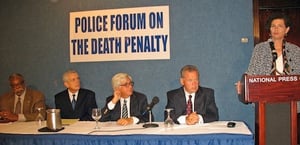
Oct 13, 2010
COSTS: “Can California Confront Costs of the Death Penalty?”
A recent op-ed by Professor Gerald Uelmen of Santa Clara Law School in the Sacramento Bee highlighted major concerns about California’s death penalty, including its high costs and the difficulty in finding competent representation for death row inmates. Uelmen also noted that California has the broadest death penalty law in the country, which allows for more death-eligible offenses than other death penalty states. According to the op-ed, “Although death penalty laws are supposed to narrow the…
Read MoreOct 13, 2010
Fighting Crime in the U.S. and Internationally: Is the Death Penalty Necessary?
Fighting Crime in the U.S. and Internationally: Is the Death Penalty Necessary? A Unique Conversation Between U.S. and European Law Enforcement National Press Club — Washington, D.C. Oct. 13, 2010 — 9:30 – 11:00 AM (Media Contact: Margot Friedman at 202 – 332-5550 or email) (Washington, D.C.) At a time when the death penalty is in the news, including a halt to executions in California and the first execution of a woman in 100 years in Virginia, law enforcement officers from the U.S. and Europe…
Read MoreOct 13, 2010
International Police Forum on the Death Penalty
On October 13, 2010, officials from the U.S. and Europe held what may have been the first international forum of law enforcement officers on the merits of the death penalty in reducing violent crime. The officers discussed whether capital punishment actually helps to keep citizens safe, assists healing for victims, and uses crime-fighting resources efficiently. The panelists addressed issues such as deterrence, closure to victims’ families, and costs as compared to alternative sentences. The…
Read More
Oct 12, 2010
Supreme Court to Hear DNA Testing Case on October 13
On October 13, the U.S. Supreme Court will hear arguments in Skinner v. Switzer. Hank Skinner was convicted of murdering his girlfriend and her two sons in 1993 in their Texas home. He has always maintained his innocence, and there is untested DNA evidence that may prove someone else committed the crime. Some DNA testing was conducted before trial, placing Skinner in the house where his girlfriend lived, a fact he does not dispute. Although Texas has a law allowing some post-conviction DNA…
Read More
Oct 11, 2010
BOOKS: “The Search for Lofie Louise”
“The Search for Lofie Louise” by Helen B. Anthony tells the true story of Louise Peete, a woman convicted of two murders in California over two decades apart in the early 1900s. She denied her guilt in both instances, and her story and trial were widely covered by the media in California. Peete received a life sentence for the first murder and a death sentence for the second; she was executed on April 11, 1947. The author captures the history of the death penalty in an earlier era. Today, the…
Read More
Oct 08, 2010
MULTIMEDIA: Frontline to Examine Possible Innocence of Man Executed in Texas
On October 19, PBS’s FRONTLINE will air Death by Fire, a documentary closely examining the evidence used to convict Cameron Todd Willingham of the arson deaths of his three children. The documentary will focus on a critical finding that was revealed just weeks before Willingham’s execution — that fire investigators apparently relied on outdated arson science to determine that Willingham had set the fire that killed his children. Gerald Hurst, a forensic arson expert, reviewed the evidence based…
Read MoreOct 07, 2010
Police Chiefs Fear Budget Cuts May Lead to Crime Increase
Police chiefs from around the country are expressing fears that crime rates will increase as law enforcement resources are cut during the economic downturn. In Sacramento, California, homicides are up 43% and assaults on police officers are up 13%, while the department was forced to eliminate its vice unit. In Phoenix, Arizona, a lack of funds is causing police vacancies to go unfilled. Similar concerns were expressed by police chiefs in Maryland and Virginia. Chuck Wexler, Executive Director…
Read More
Oct 06, 2010
Supreme Court Considers Prosecutorial Immunity for Withholding Evidence in Death Penalty Case
On October 6, the U.S. Supreme Court heard arguments in Connick v. Thompson. John Thompson, who was released from death row in 2003 after newly discovered evidence undermined his murder conviction, sued the New Orleans District Attorney’s office for failing to train its attorneys about their legal obligation to turn over evidence that could help defendants prove their innocence. Thompson’s lawyers discovered that prosecutors deliberately covered up inconsistencies in eyewitness statements and…
Read More
Oct 05, 2010
NEW VOICES: Growing Conservative Sentiment Concludes Death Penalty Not Needed
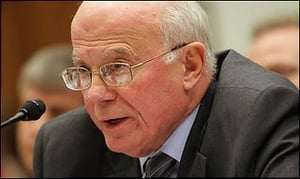
In a recent op-ed in the Richmond Times-Dispatch, two leading conservatives declared that the death penalty in the United States “is no longer a necessary form of punishment.” Richard A. Viguerie (pictured) and Brent Bozell urged their fellow conservatives to consider that the death penalty “is an expensive government program with the power to kill people.” “Conservatives,” they wrote, “don’t trust the government is always capable, competent, or fair with far lighter tasks.” They particularly…
Read More