Publications & Testimony
Testimony and Statements on the Death Penalty
FROM DPIC
For testimony by former Executive Director Robert Dunham and former Executive Director Richard C. Dieter, please visit our page DPIC Testimony.
FROM RELIGIOUS LEADERS AND ORGANIZATIONS
- News Brief: Pope Francis Calls for Prayer to Abolish the Death Penalty (September 1, 2022)
- Jewish Congregation Renews Request for Department of Justice to Drop Death Penalty in Tree of Life Synagogue Killings (June 24, 2021)
- Orthodox Church Patriarch Calls Death Penalty Incompatible with Christian Beliefs (October 20, 2020)
- Presbyterian Church (U.S.A.) — Statement on the Federal Death Penalty (August 5, 2019)
- Louisiana Christian Faith Leaders Call for State to Abolish Death Penalty (April 25, 2019)
- Pittsburgh Rabbi’s Wife Opposes Death Penalty for Tree of Life Synagogue Killings (March 18, 2019)
- Orthodox Jewish Organization Calls for an End to Capital Punishment in the U.S. | Death Penalty Information Center (February 17, 2016)
- Baptist Theologian Says Death Penalty Does Not Fit With Christian Theology (March 8, 2016)
- Civil and Human Rights: Death Penalty — Church & Society, The United Methodist Church
- Religious Views: Over 150 Catholic Theologians Call for Repeal of the Death Penalty (September 27, 2011)
- Power Over Life and Death — The Power to Save a Life (January 15, 2005)
- Responsibility, Rehabilitation, and Restoration: A Catholic Perspective on Crime and Criminal Justice (November 2000)
- The Challenge of Holiness: A Sermon on the Death Penalty (January 10, 2000)
- General Assembly of the Texas Conference of Churches — Resolution Opposing the Death Penalty (February 24, 1998)
- Statement by Catholic Bishops of Texas on Capital Punishment (October 20, 1997)
- Catholic Church Expresses Strong Opposition to Capital Punishment in Catechism (September 9, 1997)
- Catholic Bishops of Iowa Issue Statement on Death Penalty (February 4, 1998)
- To End the Death Penalty: A Report of the National Jewish/Catholic Consultation
- Transcript of Dr. Pat Robertson’s Speech on the Role of Religion and the Death Penalty at The College of William and Mary
- Collection of Official Catholic Statements on the Death Penalty (1980)
FROM THE INTERNATIONAL COMMUNITY
- UN experts call for universal abolition of the death penalty | OHCHR (October 9, 2023)
- Zambia Becomes 25th Sub-Saharan African Nation to Abolish Death Penalty (December 23, 2022)
- Belgium Wants a World Without the Death Penalty (October 20, 2022)
- As France Prepares to Assume Presidency of European Union, Emmanuel Macron Announces Initiative for Worldwide Abolition of Death Penalty (October 11, 2021)
- U.N. Secretary-General, European Union Ambassador Call for Abolition of “Barbaric” Death Penalty (October 11, 2017)
- European Union Calls for Abolition of Capital Punishment as World Coalition Hosts International Death Penalty Conference (June 27, 2017)
- U.N. Investigator Talks About the Future of Solitary and the Death Penalty (November 7, 2016)
- World Congress Against the Death Penalty Renews Call for Global Moratorium, Pope Sends Message of Support (June 27, 2016)
- Declaration by the Presidency on behalf of the European Union on the 400th execution in Texas from the Council of the European Union (August 21, 2007)
- Resolution Supporting Worldwide Moratorium on Executions from the United Nations Commission on Human Rights (April 1999)
- Mary Robinson, U.N. High Commissioner for Human Rights — Message to the Press Conference organized by the Death Penalty Information Center for the release of the report, “International Perspectives on the Death Penalty” (October 12, 1999)
- Status of the International Covenants on Human Rights from the United Nations Commission on Human Rights (April 1998)
FROM ADVOCACY GROUPS
- Advocacy Group Tells Supreme Court that Negative Stereotypes Distort Perception that Latinos in Death-Penalty Cases Pose Future Danger to Society (April 15, 2022)
- Disability Rights Groups, Legal Experts, and Conservative Advocates Urge Supreme Court to Strike Down Georgia’s Uniquely Harsh Proof Requirements in Death-Penalty Intellectual Disabilities Cases (January 11, 2022)
- NAACP Reaffirms Its Support of Abolishing the Death Penalty (2022)
- More Than 80 Civil Rights and Advocacy Organizations Urge President Biden to End Federal Executions | Death Penalty Information Center (February 9, 2021)
- More Than 250 Conservative Leaders Join Call to End Death Penalty (October 29, 2019)
- National Alliance on Mental Illness: The Death Penalty
- Florida League of Women Voters Calls for Halt to Executions (May 28, 2007)
- Victims Organizations Issue Joint Statement for National Victims’ Rights Week (April 19, 2007)
FROM JUDGES, LEGISLATORS, AND OTHER ORGANIZATIONS
- Republican-led Oklahoma committee considers pause on executions amid death case scrutiny (October 5, 2023)
- Former Pro-Death Penalty District Attorney Explains Why He Now Supports Abolition, and Fears Political Promises to Expand the Use of the Death Penalty (August 20, 2023)
- Pressley, Durbin Reintroduce Bill to End the Federal Death Penalty (July 13, 2023)
- The Lancet Editorial: Physician Involvement in Executions Violates Medical Ethics | Death Penalty Information Center (May 20, 2023)
- APA calls for extending ineligibility for the death penalty to adolescent offenders younger than age 21 (August 4, 2022)
- Why some Republicans are turning against the death penalty | Ron Ferguson | Ohio House of Representatives (March 8, 2022)
- Eight years on Texas’ highest criminal court turned Elsa Alcala into a death penalty skeptic. How will the court change without her? (January 26, 2019)
- AMA to Supreme Court: Doctor participation in executions unethical (August 22, 2018)
- Former Governor Bill Richardson: Death Penalty Is Bad for Business, Out of Step With World’s Views (June 16, 2017)
- Capital Punishment and Nurses’ Participation in Capital Punishment (2016)
- Former Ohio Attorney General Jim Petro Says Death Penalty Unfixable, “Not Worth It Any More” (September 12, 2016)
- Resolution Supporting Repeal of the Death Penalty, National Hispanic Caucus of State Legislators (August 11, 2016)
- Retired Police Captain Says Repealing Death Penalty Is “Smart on Crime” (November 24, 2014)
- Resolution Supporting Abolition of the Death Penalty, Natl. Assoc. of Black Psychologists (2012)
- The Road to Justice and Peace by New Jersey State Senator Raymond Lesniak (February 1, 2009)
- Statement On The Federal Death Penalty System by Senator Feingold (June 7, 2001)
- Statement on the Need for a Federal Moratorium on the Death Penalty Senator Feingold (October 29, 2000)
- Death Penalty: The Torah and Today (August 23, 2000)
- Press Release for Senator Russ Feingold’s Introduction of Senate’s First Death Penalty Moratorium Bill (April 20, 2000)
- Amnesty International Southern Regional Conference: Orlando, Florida Remarks by Former Florida Chief Justice Gerald Kogan (October 23, 1999)
- American Bar Association Resolution on the Death Penalty (February 3, 1997)
FROM MURDER VICTIMS’ FAMILY MEMBERS
Items: 5641 — 5650
Nov 03, 2005
NEW VOICES: Texas Prosecutors Address Concerns About Innocence
In an article about the approaching 1,000th execution in the U.S., Tarrant County prosecutor Alan Levy and Harris County District Attorney Charles Rosenthal addressed the current state of the death penalty and the impact of growing concerns about the issue of innocence: Levy, who heads the criminal division of the Tarrant County D.A.’s office, said that he often wonders whether the executions that have taken place have been worth the expense, controversy, and time: “It’s a pretty clumsy…
Read MoreNov 01, 2005
Relatively Few Federal Death Sentences, But Proposed Legislation Would Make It Easier
The Federal Death Penalty Resource Counsel Project reported that only 5 of the 22 juries that heard federal capital cases imposed death sentences in the past year. During John Ashcroft’s term as Attorney General from 2001 to 2005, 18 of the 63 juries in capital cases returned death sentences. Some members of Congress have proposed easing the rules for obtaining death sentences in federal cases, allowing the government to seek the death penalty repeatedly if the jury is not unanimous for either…
Read MoreNov 01, 2005
Puerto Rican Court Bars Extradition of Man Facing Death Penalty to Pennsylvania
An Appeal Court of the Commonwealth of Puerto Rico recently held that it would be unconstitutional to extradite Juan Melendez Cruz to Pennsylvania if he faces a possible death sentence. The court referred to the issue as one involving the fundamental right to life. In July 2003, Philadelphia District Attorney spokeswoman Cathie Abookire confirmed that Melendez Cruz, a Puerto Rican native, could face the death penalty in Pennsylvania. Melendez Cruz’s attorney, Eileen Diaz, argued that…
Read MoreNov 01, 2005
PUBLIC OPINION: Gallup Poll Reports Lowest Death Penalty Support in 27 Years
An October 2005 Gallup Poll found that only 64% of Americans favored the death penalty for those convicted of murder. The last time the poll found a lower support was in 1978 when 62% favored the death penalty. The high point for public endorsement of the death penalty came in 1994 when 80% supported capital punishment. This most recent poll result is consistent with Gallup Polls taken in October 2004 and 2003, both registering a 64% support of the death penalty. (See Gallup Poll Document…
Read MoreOct 31, 2005
North Carolina Death Penalty Study Commission Announced
North Carolina House Speaker Jim Black has appointed 20 House members to a study commission that will examine how the death penalty is carried out in the state. The commission will also recommend possible capital punishment-related policy reforms for their colleagues to consider during their session next spring. The commission will be chaired by Representatives Joe Hackney of Chapel Hill and Beverly Earle of Charlotte. Members of the commission will consult with victims’ family members, law…
Read MoreOct 28, 2005
DOCUMENTARY: “After Innocence” Tells the Stories of the Wrongfully Convicted Following Their Release
A new documentary, “After Innocence,” by Jessica Sanders and Marc Simon, is opening in cities around the country. This award-winning film (Sundance and other film festivals) tells the stories of wrongfully convicted defendants who were exonerated through DNA evidence, and about what happens to them after their release as they attempt to rebuild their lives. The film opens in Washington, D.C. at the Landmark’s E St. Cinema, 555 11th St. NW, on Friday, Nov. 4. A discussion will follow the film…
Read MoreOct 27, 2005
EDITORIAL: L.A. Times Calls for End to Death Penalty
In an editorial on October 27, the Los Angeles Times called for an end to the death penalty in California. The Times stated that the punishment should end not because of the merits of individual death row inmates, such as Stanley Williams, scheduled for execution on December 13, but because of “who we are” as a civilized society: EDITORIAL Shut down death rowOctober 27, 2005 STANLEY “TOOKIE” WILLIAMS is a charismatic symbol of what’s wrong with the death penalty — and of what’s wrong with the…
Read MoreOct 26, 2005
NEW DPIC REPORT EXAMINES DEATH PENALTY FROM JURORS’ PERSPECTIVES
NEW DPIC REPORT EXAMINES DEATH PENALTY FROM JURORS’ PERSPECTIVES Blind Justice: Juries Deciding Life and Death With Only Half the Truth, a new groundbreaking report issued by the Death Penalty Information Center, examines death penalty problems from the perspective of jurors and reveals that they often find themselves at the center of a highly charged courtroom battle where they are treated as pawns, manipulated, and kept in the dark. Tapping into the personal experiences of capital jurors…
Read More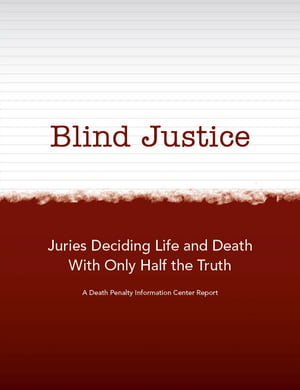
Oct 26, 2005
Patriot Act Reauthorization Could Impact Federal Death Penalty
Several provisions contained within the U.S. House of Representatives version of legislation to reauthorize the USA Patriot Act anti-terrorism law aim to dramatically transform the federal death penalty system by allowing smaller juries to decide on executions and giving prosecutors the ability to try again if the jury deadlocks on sentencing. The legislative changes, sponsored by Texas Congressman John Carter, would also triple the number of terrorism-related crimes eligible for the death…
Read MoreOct 21, 2005
NEW RESOURCE: The Death Penalty: Constitutional Issues, Commentaries and Case Briefs
The Death Penalty: Constitutional Issues, Commentaries and Case Briefs is a new textbook that brings together many of the legal issues of the death penalty and presents them in an easy-to-digest form. The book provides a brief retrospective analysis of capital punishment over the past two centuries, and then details the current status of the U.S. death penalty. With a chapter that focuses on the U.S. Supreme Court cases Furman v. Georgia and Gregg v. Georgia, as well as chapters on race, the…
Read More