Publications & Testimony
Testimony and Statements on the Death Penalty
FROM DPIC
For testimony by former Executive Director Robert Dunham and former Executive Director Richard C. Dieter, please visit our page DPIC Testimony.
FROM RELIGIOUS LEADERS AND ORGANIZATIONS
- News Brief: Pope Francis Calls for Prayer to Abolish the Death Penalty (September 1, 2022)
- Jewish Congregation Renews Request for Department of Justice to Drop Death Penalty in Tree of Life Synagogue Killings (June 24, 2021)
- Orthodox Church Patriarch Calls Death Penalty Incompatible with Christian Beliefs (October 20, 2020)
- Presbyterian Church (U.S.A.) — Statement on the Federal Death Penalty (August 5, 2019)
- Louisiana Christian Faith Leaders Call for State to Abolish Death Penalty (April 25, 2019)
- Pittsburgh Rabbi’s Wife Opposes Death Penalty for Tree of Life Synagogue Killings (March 18, 2019)
- Orthodox Jewish Organization Calls for an End to Capital Punishment in the U.S. | Death Penalty Information Center (February 17, 2016)
- Baptist Theologian Says Death Penalty Does Not Fit With Christian Theology (March 8, 2016)
- Civil and Human Rights: Death Penalty — Church & Society, The United Methodist Church
- Religious Views: Over 150 Catholic Theologians Call for Repeal of the Death Penalty (September 27, 2011)
- Power Over Life and Death — The Power to Save a Life (January 15, 2005)
- Responsibility, Rehabilitation, and Restoration: A Catholic Perspective on Crime and Criminal Justice (November 2000)
- The Challenge of Holiness: A Sermon on the Death Penalty (January 10, 2000)
- General Assembly of the Texas Conference of Churches — Resolution Opposing the Death Penalty (February 24, 1998)
- Statement by Catholic Bishops of Texas on Capital Punishment (October 20, 1997)
- Catholic Church Expresses Strong Opposition to Capital Punishment in Catechism (September 9, 1997)
- Catholic Bishops of Iowa Issue Statement on Death Penalty (February 4, 1998)
- To End the Death Penalty: A Report of the National Jewish/Catholic Consultation
- Transcript of Dr. Pat Robertson’s Speech on the Role of Religion and the Death Penalty at The College of William and Mary
- Collection of Official Catholic Statements on the Death Penalty (1980)
FROM THE INTERNATIONAL COMMUNITY
- UN experts call for universal abolition of the death penalty | OHCHR (October 9, 2023)
- Zambia Becomes 25th Sub-Saharan African Nation to Abolish Death Penalty (December 23, 2022)
- Belgium Wants a World Without the Death Penalty (October 20, 2022)
- As France Prepares to Assume Presidency of European Union, Emmanuel Macron Announces Initiative for Worldwide Abolition of Death Penalty (October 11, 2021)
- U.N. Secretary-General, European Union Ambassador Call for Abolition of “Barbaric” Death Penalty (October 11, 2017)
- European Union Calls for Abolition of Capital Punishment as World Coalition Hosts International Death Penalty Conference (June 27, 2017)
- U.N. Investigator Talks About the Future of Solitary and the Death Penalty (November 7, 2016)
- World Congress Against the Death Penalty Renews Call for Global Moratorium, Pope Sends Message of Support (June 27, 2016)
- Declaration by the Presidency on behalf of the European Union on the 400th execution in Texas from the Council of the European Union (August 21, 2007)
- Resolution Supporting Worldwide Moratorium on Executions from the United Nations Commission on Human Rights (April 1999)
- Mary Robinson, U.N. High Commissioner for Human Rights — Message to the Press Conference organized by the Death Penalty Information Center for the release of the report, “International Perspectives on the Death Penalty” (October 12, 1999)
- Status of the International Covenants on Human Rights from the United Nations Commission on Human Rights (April 1998)
FROM ADVOCACY GROUPS
- Advocacy Group Tells Supreme Court that Negative Stereotypes Distort Perception that Latinos in Death-Penalty Cases Pose Future Danger to Society (April 15, 2022)
- Disability Rights Groups, Legal Experts, and Conservative Advocates Urge Supreme Court to Strike Down Georgia’s Uniquely Harsh Proof Requirements in Death-Penalty Intellectual Disabilities Cases (January 11, 2022)
- NAACP Reaffirms Its Support of Abolishing the Death Penalty (2022)
- More Than 80 Civil Rights and Advocacy Organizations Urge President Biden to End Federal Executions | Death Penalty Information Center (February 9, 2021)
- More Than 250 Conservative Leaders Join Call to End Death Penalty (October 29, 2019)
- National Alliance on Mental Illness: The Death Penalty
- Florida League of Women Voters Calls for Halt to Executions (May 28, 2007)
- Victims Organizations Issue Joint Statement for National Victims’ Rights Week (April 19, 2007)
FROM JUDGES, LEGISLATORS, AND OTHER ORGANIZATIONS
- Republican-led Oklahoma committee considers pause on executions amid death case scrutiny (October 5, 2023)
- Former Pro-Death Penalty District Attorney Explains Why He Now Supports Abolition, and Fears Political Promises to Expand the Use of the Death Penalty (August 20, 2023)
- Pressley, Durbin Reintroduce Bill to End the Federal Death Penalty (July 13, 2023)
- The Lancet Editorial: Physician Involvement in Executions Violates Medical Ethics | Death Penalty Information Center (May 20, 2023)
- APA calls for extending ineligibility for the death penalty to adolescent offenders younger than age 21 (August 4, 2022)
- Why some Republicans are turning against the death penalty | Ron Ferguson | Ohio House of Representatives (March 8, 2022)
- Eight years on Texas’ highest criminal court turned Elsa Alcala into a death penalty skeptic. How will the court change without her? (January 26, 2019)
- AMA to Supreme Court: Doctor participation in executions unethical (August 22, 2018)
- Former Governor Bill Richardson: Death Penalty Is Bad for Business, Out of Step With World’s Views (June 16, 2017)
- Capital Punishment and Nurses’ Participation in Capital Punishment (2016)
- Former Ohio Attorney General Jim Petro Says Death Penalty Unfixable, “Not Worth It Any More” (September 12, 2016)
- Resolution Supporting Repeal of the Death Penalty, National Hispanic Caucus of State Legislators (August 11, 2016)
- Retired Police Captain Says Repealing Death Penalty Is “Smart on Crime” (November 24, 2014)
- Resolution Supporting Abolition of the Death Penalty, Natl. Assoc. of Black Psychologists (2012)
- The Road to Justice and Peace by New Jersey State Senator Raymond Lesniak (February 1, 2009)
- Statement On The Federal Death Penalty System by Senator Feingold (June 7, 2001)
- Statement on the Need for a Federal Moratorium on the Death Penalty Senator Feingold (October 29, 2000)
- Death Penalty: The Torah and Today (August 23, 2000)
- Press Release for Senator Russ Feingold’s Introduction of Senate’s First Death Penalty Moratorium Bill (April 20, 2000)
- Amnesty International Southern Regional Conference: Orlando, Florida Remarks by Former Florida Chief Justice Gerald Kogan (October 23, 1999)
- American Bar Association Resolution on the Death Penalty (February 3, 1997)
FROM MURDER VICTIMS’ FAMILY MEMBERS
Items: 6571 — 6580
Oct 12, 1999
Mary Robinson, U.N. High Commissioner for Human Rights — Message to the Press Conference organized by the Death Penalty Information Center for the release of the report, “International Perspectives on the Death Penalty”
Message from Mary Robinson: United Nations High Commissioner for Human Rights, to the Press Conference Organized by the Death Penalty Information Center New York City, USA Tuesday, 12 October 1999 Ladies and Gentlemen, I regret that I am not able to be with you today to share this important event. I am confident that today’s discussion will be fruitful and contribute to the continuing international effort aimed at limiting, and one day, eliminating the use of the death penalty throughout the…
Read MoreSep 15, 1999
Historic Illinois Hearings Address Innocence and the Death Penalty
Following a series of celebrated releases of innocent defendants from its death row, Illinois’s House of Representatives held hearings to address the state’s system of capital punishment on September 15 & 16, 1999. Among those who testified were Sister Helen Prejean, author of Dead Man Walking; Mike Farrell, actor and human rights activist; Renny Cushing, Director of Murder Victims Families for Reconciliation; Bryan Stevenson, Director of Equal Justice Initiative; Professor Lawrence Marshall…
Read MoreSep 15, 1999
Testimony of Richard C. Dieter, Esq. Executive Director, Death Penalty Information Center to the Illinois House of Representatives addressing innocence and the death penalty
HISTORIC ILLINOIS HEARINGS ADDRESS INNOCENCE AND THE DEATH PENALTY Following a series of celebrated releases of innocent defendants from its death row, Illinois’s House of Representatives held hearings to address the state’s system of capital punishment on September 15 & 16, 1999. Among those who testified were Sister Helen Prejean, author of Dead Man Walking; Mike Farrell, actor and human rights activist; Renny Cushing, Director of Murder Victims Families for Reconciliation; Bryan Stevenson…
Read MoreAug 01, 1999
United States Supreme Court Decisions: 1998 — 1999 Term
Jones v. U.S., 97 – 9361, The Court, reviewing the sentencing provisions of the Federal Death Penalty Act of 1994 for the first time, held that jurors in death penalty cases do not have to be told about the consequences of their failing to agree on whether life or death is the appropriate sentence. The sentencing provisions of the Federal Death Penalty Act allow for three sentencing options: death, life without parole and a lesser sentence. The Court’s instructions to the jury in Jones were…
Read MoreJul 08, 1999
Execution Photos of Allen Davis
Pictures of Allen Davis, the last person to be executed by the electric chair in Florida, July 8, 1999.
Read More
Apr 28, 1999
Resolution Supporting Worldwide Moratorium on Executions from the United Nations Commission on Human Rights
Resolution Supporting Worldwide Moratorium on Executions April 1999 [Preliminary unedited version] Question of the death penalty Commission on Human Rights resolution 1999/61 The Commission on Human Rights, Recalling article 3 of the Universal Declaration of Human Rights, which affirms the right of everyone to life, article 6 of the International Covenant on Civil and Political Rights and articles 6 and 37 (a) of the Convention on the Rights of the Child, Recalling also General Assembly…
Read MoreMar 24, 1999
To End the Death Penalty: A Report of the National Jewish/Catholic Consultation
Co-sponsored by the National Council of Synagogues and the Bishops’ Committee for Ecumenical and Interreligious Affairs of the National Conference of Catholic Bishops1 “A Sanhedrin that puts one person to death once in seven years is called destructive. Rabbi Eliezer ben Azariah says: Or even once in seventy years. Rabbi Tarfon and Rabbi Akiba say: Had we been the Sanhedrin, none would ever have been put to death.” Mishnah Makkot, 1:10 (2nd Century, C.E.) “A sign of hope is the increasing…
Read MoreDec 31, 1998
Summaries of Additional Deterrence Studies
Deterrence & Murder of Police Officers — According to statistics from the latest FBI Uniform Crime Report, regions of the country that use the death penalty the least are the safest for police officers. Police are most in danger in the south, which accounts for 80% of all executions (90% in 2000). From 1989 – 1998, 292 law enforcement officers were feloniously killed in the south, 125 in the west, 121 in the midwest, and 80 in the northeast, the region with the fewest execution — less than 1%.
Read More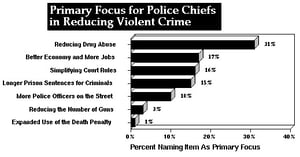
Nov 12, 1998
The US Death Penalty and International Law: US Compliance with the Torture and Race Conventions
Ford Foundation Symposium November 12, 1998 by Richard C. Dieter, Esq. Executive Director, Death Penalty Information Center Introduction The U.N. Convention Against Torture and Other Cruel, Inhuman or Degrading Treatment or Punishment (the Torture Convention) was adopted by the General Assembly of the United Nations on December 10, 19841 and ratified by the United States ten years later. In all, 176 countries have either ratified or signed the torture convention. The thrust of this treaty…
Read MoreApr 03, 1998
Status of the International Covenants on Human Rights from the United Nations Commission on Human Rights
Question of the Death Penalty (approved April 3, 1998; 26 nations in favor, 13 against, 12 abstentions) 30th March 1998 Commission on Human Rights Fifty-fourth session Agenda Item 13 E/CN.4/1998/L.12 The Commission on Human Rights, Recalling article 3 of the Universal Declaration of Human Rights, which affirms the right of everyone to life, article 6 of the International Covenant on Civil and Political Rights and articles 6 and 37 (a) of the Convention on the Rights of the Child, Recalling…
Read More