Publications & Testimony
Testimony and Statements on the Death Penalty
FROM DPIC
For testimony by former Executive Director Robert Dunham and former Executive Director Richard C. Dieter, please visit our page DPIC Testimony.
FROM RELIGIOUS LEADERS AND ORGANIZATIONS
- News Brief: Pope Francis Calls for Prayer to Abolish the Death Penalty (September 1, 2022)
- Jewish Congregation Renews Request for Department of Justice to Drop Death Penalty in Tree of Life Synagogue Killings (June 24, 2021)
- Orthodox Church Patriarch Calls Death Penalty Incompatible with Christian Beliefs (October 20, 2020)
- Presbyterian Church (U.S.A.) — Statement on the Federal Death Penalty (August 5, 2019)
- Louisiana Christian Faith Leaders Call for State to Abolish Death Penalty (April 25, 2019)
- Pittsburgh Rabbi’s Wife Opposes Death Penalty for Tree of Life Synagogue Killings (March 18, 2019)
- Orthodox Jewish Organization Calls for an End to Capital Punishment in the U.S. | Death Penalty Information Center (February 17, 2016)
- Baptist Theologian Says Death Penalty Does Not Fit With Christian Theology (March 8, 2016)
- Civil and Human Rights: Death Penalty — Church & Society, The United Methodist Church
- Religious Views: Over 150 Catholic Theologians Call for Repeal of the Death Penalty (September 27, 2011)
- Power Over Life and Death — The Power to Save a Life (January 15, 2005)
- Responsibility, Rehabilitation, and Restoration: A Catholic Perspective on Crime and Criminal Justice (November 2000)
- The Challenge of Holiness: A Sermon on the Death Penalty (January 10, 2000)
- General Assembly of the Texas Conference of Churches — Resolution Opposing the Death Penalty (February 24, 1998)
- Statement by Catholic Bishops of Texas on Capital Punishment (October 20, 1997)
- Catholic Church Expresses Strong Opposition to Capital Punishment in Catechism (September 9, 1997)
- Catholic Bishops of Iowa Issue Statement on Death Penalty (February 4, 1998)
- To End the Death Penalty: A Report of the National Jewish/Catholic Consultation
- Transcript of Dr. Pat Robertson’s Speech on the Role of Religion and the Death Penalty at The College of William and Mary
- Collection of Official Catholic Statements on the Death Penalty (1980)
FROM THE INTERNATIONAL COMMUNITY
- UN experts call for universal abolition of the death penalty | OHCHR (October 9, 2023)
- Zambia Becomes 25th Sub-Saharan African Nation to Abolish Death Penalty (December 23, 2022)
- Belgium Wants a World Without the Death Penalty (October 20, 2022)
- As France Prepares to Assume Presidency of European Union, Emmanuel Macron Announces Initiative for Worldwide Abolition of Death Penalty (October 11, 2021)
- U.N. Secretary-General, European Union Ambassador Call for Abolition of “Barbaric” Death Penalty (October 11, 2017)
- European Union Calls for Abolition of Capital Punishment as World Coalition Hosts International Death Penalty Conference (June 27, 2017)
- U.N. Investigator Talks About the Future of Solitary and the Death Penalty (November 7, 2016)
- World Congress Against the Death Penalty Renews Call for Global Moratorium, Pope Sends Message of Support (June 27, 2016)
- Declaration by the Presidency on behalf of the European Union on the 400th execution in Texas from the Council of the European Union (August 21, 2007)
- Resolution Supporting Worldwide Moratorium on Executions from the United Nations Commission on Human Rights (April 1999)
- Mary Robinson, U.N. High Commissioner for Human Rights — Message to the Press Conference organized by the Death Penalty Information Center for the release of the report, “International Perspectives on the Death Penalty” (October 12, 1999)
- Status of the International Covenants on Human Rights from the United Nations Commission on Human Rights (April 1998)
FROM ADVOCACY GROUPS
- Advocacy Group Tells Supreme Court that Negative Stereotypes Distort Perception that Latinos in Death-Penalty Cases Pose Future Danger to Society (April 15, 2022)
- Disability Rights Groups, Legal Experts, and Conservative Advocates Urge Supreme Court to Strike Down Georgia’s Uniquely Harsh Proof Requirements in Death-Penalty Intellectual Disabilities Cases (January 11, 2022)
- NAACP Reaffirms Its Support of Abolishing the Death Penalty (2022)
- More Than 80 Civil Rights and Advocacy Organizations Urge President Biden to End Federal Executions | Death Penalty Information Center (February 9, 2021)
- More Than 250 Conservative Leaders Join Call to End Death Penalty (October 29, 2019)
- National Alliance on Mental Illness: The Death Penalty
- Florida League of Women Voters Calls for Halt to Executions (May 28, 2007)
- Victims Organizations Issue Joint Statement for National Victims’ Rights Week (April 19, 2007)
FROM JUDGES, LEGISLATORS, AND OTHER ORGANIZATIONS
- Republican-led Oklahoma committee considers pause on executions amid death case scrutiny (October 5, 2023)
- Former Pro-Death Penalty District Attorney Explains Why He Now Supports Abolition, and Fears Political Promises to Expand the Use of the Death Penalty (August 20, 2023)
- Pressley, Durbin Reintroduce Bill to End the Federal Death Penalty (July 13, 2023)
- The Lancet Editorial: Physician Involvement in Executions Violates Medical Ethics | Death Penalty Information Center (May 20, 2023)
- APA calls for extending ineligibility for the death penalty to adolescent offenders younger than age 21 (August 4, 2022)
- Why some Republicans are turning against the death penalty | Ron Ferguson | Ohio House of Representatives (March 8, 2022)
- Eight years on Texas’ highest criminal court turned Elsa Alcala into a death penalty skeptic. How will the court change without her? (January 26, 2019)
- AMA to Supreme Court: Doctor participation in executions unethical (August 22, 2018)
- Former Governor Bill Richardson: Death Penalty Is Bad for Business, Out of Step With World’s Views (June 16, 2017)
- Capital Punishment and Nurses’ Participation in Capital Punishment (2016)
- Former Ohio Attorney General Jim Petro Says Death Penalty Unfixable, “Not Worth It Any More” (September 12, 2016)
- Resolution Supporting Repeal of the Death Penalty, National Hispanic Caucus of State Legislators (August 11, 2016)
- Retired Police Captain Says Repealing Death Penalty Is “Smart on Crime” (November 24, 2014)
- Resolution Supporting Abolition of the Death Penalty, Natl. Assoc. of Black Psychologists (2012)
- The Road to Justice and Peace by New Jersey State Senator Raymond Lesniak (February 1, 2009)
- Statement On The Federal Death Penalty System by Senator Feingold (June 7, 2001)
- Statement on the Need for a Federal Moratorium on the Death Penalty Senator Feingold (October 29, 2000)
- Death Penalty: The Torah and Today (August 23, 2000)
- Press Release for Senator Russ Feingold’s Introduction of Senate’s First Death Penalty Moratorium Bill (April 20, 2000)
- Amnesty International Southern Regional Conference: Orlando, Florida Remarks by Former Florida Chief Justice Gerald Kogan (October 23, 1999)
- American Bar Association Resolution on the Death Penalty (February 3, 1997)
FROM MURDER VICTIMS’ FAMILY MEMBERS
Items: 2551 — 2560
Mar 03, 2017
Florida, Alabama Consider Legislation on Exoneree Compensation
As the Florida legislature considers a bill that would change Florida’s “Clean Hands” policy, which denies compensation for wrongful convictions if the defendant had a prior felony record, Alabama lawmakers are deciding whether to grant compensation to Anthony Ray Hinton (pictured), who was exonerated in 2015 after spending nearly 30 years on death row. In Florida, death row exoneree Herman Lindsey told the Senate Criminal Justice Committee about his having been denied compensation because of…
Read More
Mar 02, 2017
Exoneree Urges Dallas Prosecutor to Drop Death Penalty Against Veteran With PTSD
Texas capital murder exoneree Christopher Scott (pictured) has urged Dallas County’s new District Attorney, Faith Johnson, to drop the death penalty from murder charges pending against Erbie Bowser. Bowser, who is black, is a seriously mentally ill Marine veteran who was discharged from military service after having been diagnosed with Post-Traumatic Stress Disorder. He faces four capital charges in the killings of his girlfriend, his estranged wife, and their daughters. When police found him…
Read More
Mar 01, 2017
Ohio Jurors Report Emotional Toll of Serving on Capital Case
The costs of the death penalty are more than financial, they are emotional; and these effects are felt not just by the parties to the trial and the families of victims and defendants, but by the jurors as well. A recent report in the Akron Beacon Journal describes the traumatic psychological impact serving in the Summit County, Ohio death penalty trial of Eric Hendon had on the jurors in that case. After a three-month trial and capital-sentencing hearing, the jury found Hendon guilty of a 2013…
Read More
Feb 28, 2017
Geographic Disparity in the Federal Death Penalty
Although one would expect federal law to be applied evenly, an investigation into the use of the federal death penalty by the Justice Department found significant geographic disparities in prosecutions. The country is divided into federal districts, and local U.S. Attorneys are required to submit all potential death penalty cases to the Attorney General for review and may make a recommendation about seeking the death penalty. The survey reported large disparities in the geographical…
Read MoreFeb 28, 2017
Arkansas Schedules Unprecedented Eight Executions in Eleven-Day Period
Arkansas Governor Asa Hutchinson signed orders on February 27 for an unprecedented eight executions to be carried out over a period of eleven days in April. The scheduled dates for the four sets of double executions are: April 17, Bruce Ward and Don Davis; April 20, Stacey Johnson and Ledell Lee; April 24, Jack Jones and Marcel Williams; and April 27, Kenneth Williams and Jason McGehee. Arkansas Attorney General Leslie Rutledge asked that the dates be set after the U.S. Supreme Court on…
Read More
Feb 27, 2017
Federal Appeals Court Overturns Tennessee Death Penalty as a Result of Prosecutorial Misconduct
The U.S. Court of Appeals for the Sixth Circuit overturned the conviction and death sentence of Tennessee death-row prisoner Andrew Lee Thomas, Jr. on February 24, ruling that Shelby County District Attorney General Amy Weirich had unconstitutionally withheld evidence that a key prosecution witness had been paid for her cooperation in the case and then elicited perjured testimony from the witness lying about the payment. Weirich is currently facing ethical charges from the Tennessee Board of…
Read More
Feb 24, 2017
American Bar Association Human Rights Magazine on Capital Punishment
Human Rights Magazine, a quarterly publication by the American Bar Association, focused its first-quarter 2017 edition on capital punishment, marking the 40th anniversary of Gregg v. Georgia. Articles by nationally-renowned death penalty experts examine geographic disparities in death sentences, secrecy and lethal injection, intellectual disability, mental illness, and other critical questions in the current discourse around the death penalty. In the introduction to the magazine, Seth Miller…
Read More
Feb 23, 2017
American Nurses Association Adopts Position Statement Against Capital Punishment
In an expansion of their stance opposing nurse participation in executions, the American Nurses Association (ANA) announced on February 21, 2017 that the organization now for the first time opposes capital punishment itself. “Capital punishment is a human rights violation, and ANA is proud to stand in strong opposition to the death penalty,” ANA President Pamela F. Cipriano said. “All human beings, regardless of their crimes, should be treated with dignity. For those states where capital…
Read More
Feb 22, 2017
Supreme Court Grants Relief to Duane Buck in Texas Racial Bias Death Penalty Case
Saying that the “law punishes people for what they do, not who they are,” the Supreme Court on February 22, 2017, granted relief to Duane Buck (pictured, right), a Texas death-row prisoner who was sentenced to death after his own lawyer presented testimony from a psychologist who told the jury Buck was more likely to commit future acts of violence because he is black. Writing for the six-Justice majority, Chief Justice Roberts (pictured, left) said that “[d]ispensing punishment on the basis of…
Read More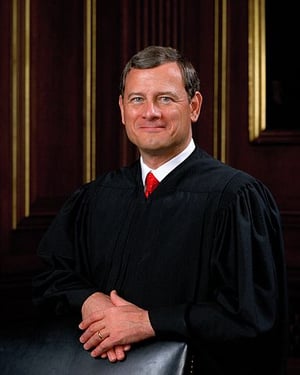
Feb 21, 2017
Florida Supreme Court Allows Death Penalty Prosecutions to Proceed
In a retreat from one of its prior decisions, the Florida Supreme Court ruled on February 20 that prosecutors could move forward with death penalty trials under Florida’s constitutionally flawed capital sentencing statute, provided the trial court specifically instructs the sentencing jurors that they must unanimously find all facts that could make a defendant eligible for the death penalty and that they must unanimously recommend death before the trial judge may impose a death sentence. In…
Read More